
 Search for...
 English
 Español
 日本語
日本語
 한국어
한국어
 عربى
عربى
Multi-Purpose 6-Tier Foldable Storage Cabinet

Picture the moment you pull a heavy storage bin out from under the bed: you kneel, grip the handles, and drag it across the carpet. Now imagine pushing the same box out with one hand. That is the practical difference made by a bottom pulley storage box — a container with wheels mounted directly under the base. It is one of the quiet workhorses of home organizing, and once you own one, it is hard to go back to static bins for heavy or frequently used items.
The logic is simple. Wheels turn lifting into rolling, reduce strain on your lower back and knees, keep the box base slightly off the floor so moisture and dust do not settle underneath, and let you rearrange a room in seconds. Whether you call it a rolling storage box, a wheeled storage bin, or a home furnishing storage box with integrated casters, the value is the same.
A bottom pulley storage box is exactly what the name suggests: a storage container with rollers attached to its underside. The "pulley" refers to the moving mechanism — usually two or four casters — that lets the whole box slide across the floor as a single unit.
The advantages over a traditional storage bin are easy to list:
In practice, the households that benefit most are those with heavy items (rice bags, pet food, bottled drinks), awkward spaces (under beds, sloped ceilings, cabinet dead zones), or daily routines that require rearranging furniture and storage more than once a week.
Not all wheeled storage boxes work the same way. The differences come down to structure, material, and wheel configuration.
These are one-piece molded plastic boxes with wheels bolted to the base. They are light, waterproof, and easy to wipe down, which makes them the natural bottom pulley storage box choice for bathrooms, kitchens, and laundry rooms. Because the body is solid, contents stay protected from dust and splashes.
Cart-style units replace the single closed bin with several open layers above a wheeled base. They suit living rooms, bedrooms, and pantries where you want to separate categories: snacks in one layer, spices in another, cleaning cloths in a third.
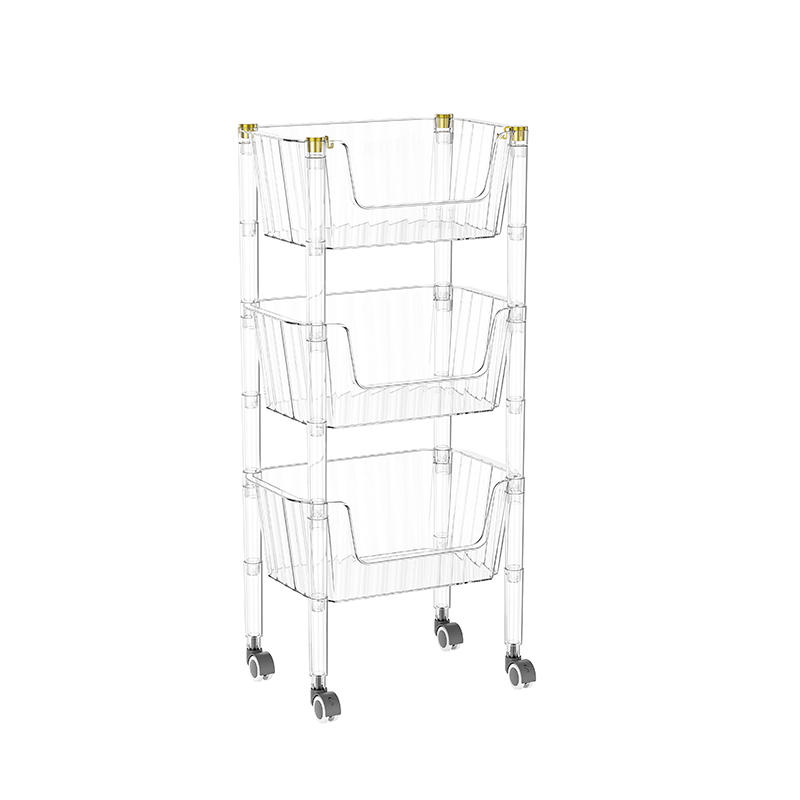
If you are comparing ready-made products, a 3-tier PET/PP/ABS mobile storage organizer cart is a typical example of this category — a mobile unit that combines the rolling advantage of a pulley base with the visibility of open shelves.
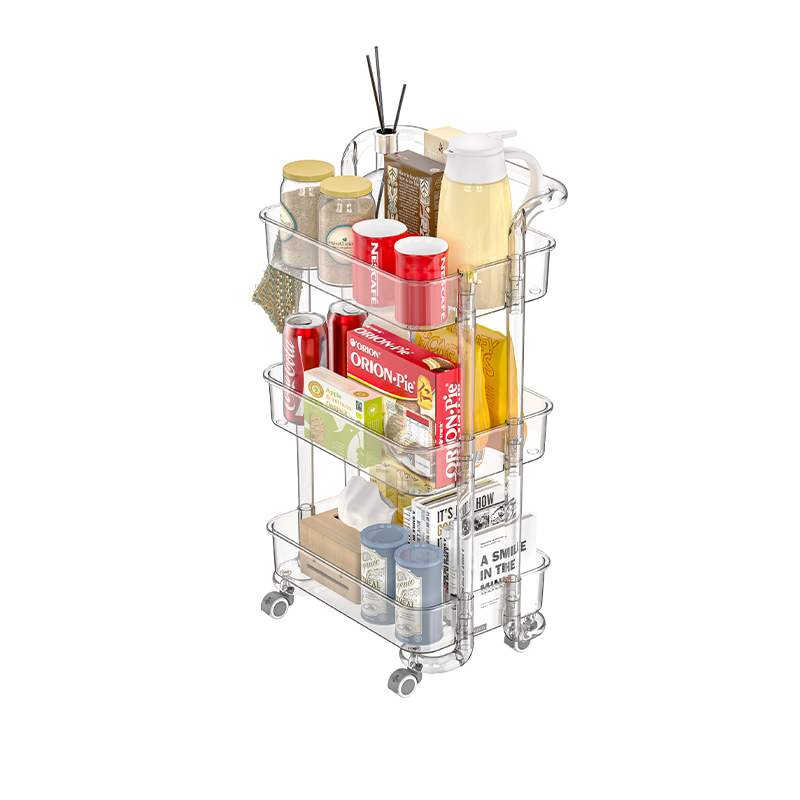 Wholesale 3-Tier PET PP ABS Mobile Storage Organizer Cart Manufacturers, OEM/ODMNingbo Orgwiser Plastic Products Co., Ltd is China 3-Tier PET PP ABS Mobile Storage Organizer Cart Manufacturers and OEM/ODM 3-Tier PET P...View Product →
Foldable versions collapse flat when empty, which helps if storage space is tight during off-seasons. They work for seasonal decorations, camping gear, or outgrown children's clothes. The trade-off is softer walls: they are less rigid than molded plastic, so they suit medium-weight, non-fragile items.
The material also affects long-term performance, and the three most common plastics in home storage each behave differently:
| Material | Typical Qualities | Best Used For |
|---|---|---|
| PET | Clear, tough, good impact resistance | Transparent bins where content visibility matters |
| PP | Lightweight, flexible, moisture resistant | Kitchens, bathrooms, and damp areas |
| ABS | Rigid, durable, smooth surface | Wheeled carts and heavier household loads |
Wheel count changes the feel too. Two-wheel designs let you tilt the box like a hand truck, which helps with heavy loads; four-wheel designs stay stable when pushed in a straight line and are easier to steer in tight corners.
The first thing to understand is that the quality of a rolling storage box is determined by the parts you never see at first glance: the wheels, the base thickness, and the load rating.
Check that the wheels are mounted with metal or reinforced plastic axles rather than thin pins, and look for a locking mechanism if the box will sit on any kind of slope.
Always compare the rated capacity against what you actually store. A box built for heavy duty usually has thicker walls and reinforcing ribs across the base. If the base flexes under hand pressure, it will struggle with bags of pet food, bottled drinks, or stacked canned goods.
Measure first, buy second. Under-bed clearance depends on the frame height, and wheels add roughly 3 to 6 cm to the total height of the box. If the unit will travel through doorways or around corners, check width and turning radius as well.
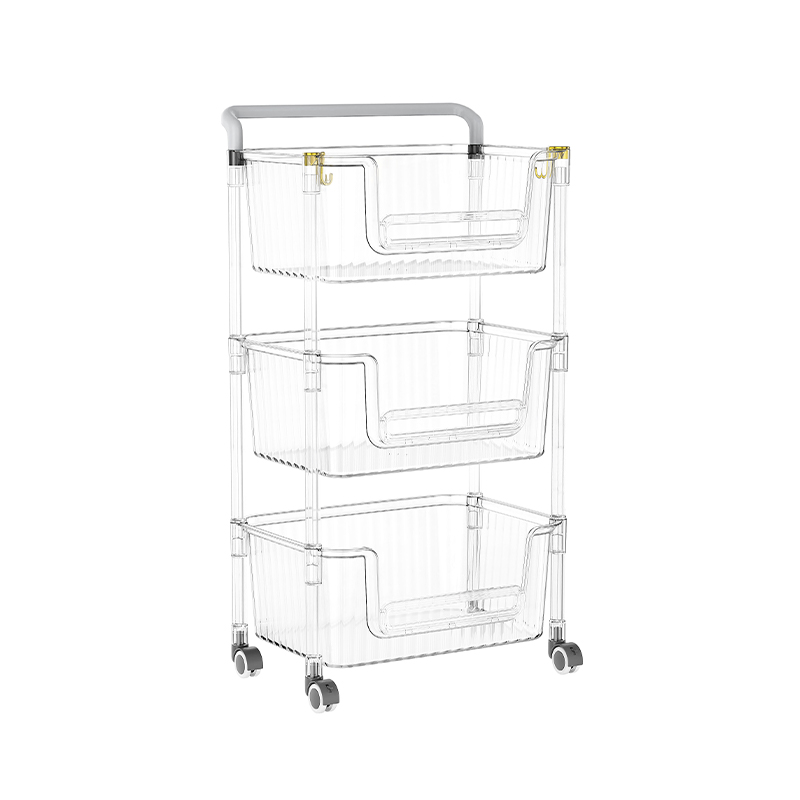
For kitchen and pantry use, confirm that the plastic is food-safe and free of strong chemical odor. Transparency is a separate but equally practical feature: a clear shell lets you identify contents in seconds without pulling the box out. That is why an adjustable clear 3-tier storage cart with wheels is a common pantry pick — you can see what each shelf holds and roll the whole unit to the counter when cooking.
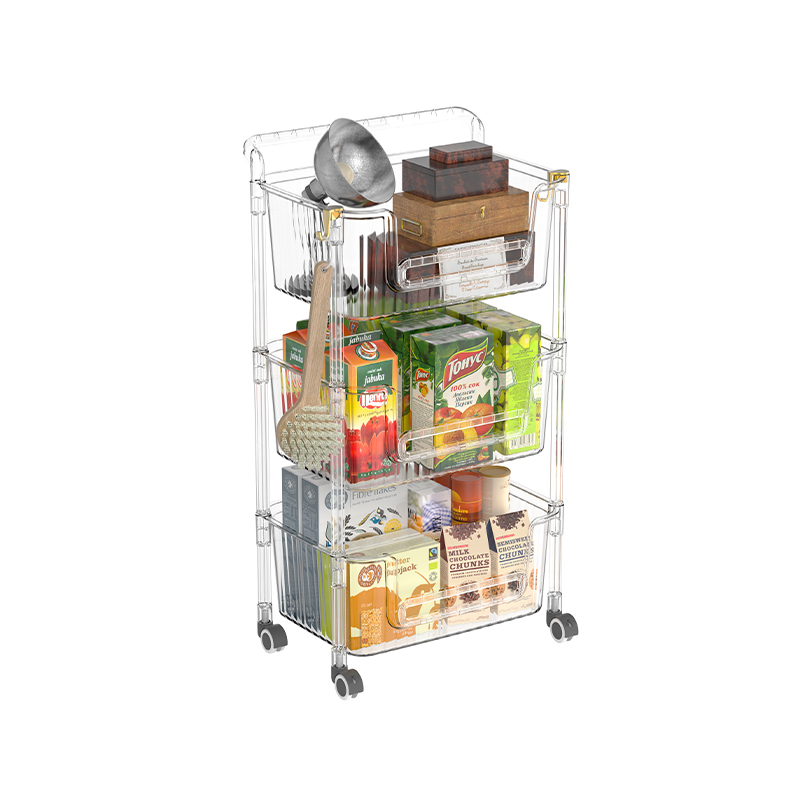 Wholesale Adjustable Clear 3 Tier Storage Cart Organizer With Wheels ManufactureNingbo Orgwiser Plastic Products Co., Ltd is China Adjustable Clear 3 Tier Storage Cart Organizer With Wheels Manufacturers and OEM/ODM A...View Product →
Once you live with a wheeled bin for a week, you start finding new spots for it. These are the setups that work best in real households.
Low rolling boxes are ideal for off-season clothes, extra bedding, and shoes. The big benefit is access: the box wheels out fully, so the back corner of the space is no longer a black hole where items disappear.
Heavy staples such as rice, flour, cooking oil, and detergent are exactly what a rolling unit should carry. You roll the load out, take what you need, and push it back. In a deep pantry, a wheeled unit also stops small jars and packets from being forgotten at the back of the shelf.
Toiletries, towels, and cleaning products can live in a rolling bin under the sink or beside the washing machine. The raised base keeps the contents away from wet floors, and the whole unit can move between bathroom, laundry, and hallway as needed.
Children can push a lightweight wheeled toy bin themselves, which turns cleanup into part of playtime. In the living room, a compact rolling cart is useful for remote controls, chargers, and media accessories — roll it out during movie night and tuck it away afterward.
Keep one rule in mind: match the storage position to the frequency of use. High-frequency items belong in wheeled units that come to you; low-frequency items can stay in static stackable bins.
A storage box with wheels only feels premium when the wheels keep rolling. The maintenance routine is short, and most problems are preventable.
If you want a deeper cleaning routine for every container in the house, our resource on how to clean and maintain home plastic storage organization covers trays, drawers, and bins with the same practical approach.
There is no single winner here because the answer depends on how the container will be used. The patterns below come from common household situations rather than from any specific brand.
| Scenario | Rolling Storage Box | Regular Storage Box |
|---|---|---|
| Heavy items moved often, such as rice or detergent | Better — you push instead of lift | Tiring and awkward to shuttle |
| Under-bed or low-cleared spaces | Better — slides out fully | Requires kneel and full removal |
| Fixed shelf storage with stacking priority | May waste vertical space | Better — tighter fit and stackable |
| Budget-sensitive single placement | Higher upfront cost | Better — simpler construction |
In reality, most homes benefit from a mixed approach. Use wheeled units for the heavy or high-frequency items, and keep static stackable boxes for seasonal decorations, documents, and shelf storage. If you are organizing a whole room, start by identifying the three things you reach for most often — they are your best candidates for a bottom pulley storage box.
If you are sourcing products for resale, focus on specifications that drive long-term satisfaction: wheel type, load rating, material grade, and the availability of replacement wheels. A manufacturer with in-house injection molding can respond faster to custom color, logo, or size requests — a relevant point when you compare a bottom pulley storage box or any home furnishing storage box for distribution.
Whether you choose a single wheeled bin or a multi-tier rolling cart, a bottom pulley storage box belongs in modern home furnishing storage planning. It solves a specific and common problem — heavy or awkward items that move often — with a simple, dependable mechanism. Start with one unit in the room where storage bothers you most, and you will quickly see where the next one should go.


Zhangqi Industrial Park, Cixi City, Ningbo City, Zhejiang Province

