
 Search for...
 English
 Español
 日本語
 한국어
 عربى
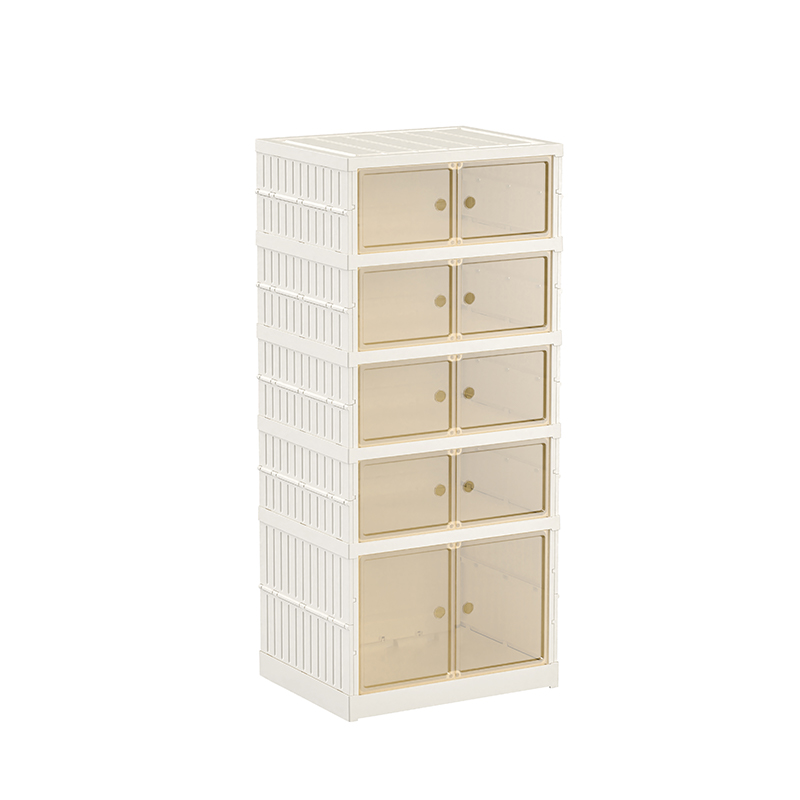
Multi-Purpose 6-Tier Foldable Storage Cabinet

A 40 cm kitchen drawer that swallows twelve spice jars will refuse one 1-litre oil bottle, and that is usually the moment someone starts hunting for an adjustable partition storage box. The short answer before the detail: movable dividers earn their price only when three things are true at once. The panels stay put under load, the maker publishes honest internal dimensions, and the plastic suits the room the box lives in. Everything else is decoration.
The reasoning is plain geometry. A compartment is only useful when it matches the footprint of what goes inside it. Fixed dividers are molded around one family of items, so on the day your contents change, the box quietly starts storing air. Adjustable partitions let you re-cut the internal volume to fit the actual load, which matters far more on a fridge shelf or in a bathroom drawer than in a warehouse tote whose contents never change.
Take a box measuring 36 x 28 x 14 cm, roughly 14 litres of gross volume. Molded as a four-slot insert on a 9 cm pitch, it handles 8 cm jars beautifully and forces a 12 cm container to occupy two slots. That is 18 cm of width committed to a 12 cm object, with about 5 cm of dead air beside it. Repeat that across six containers and you have thrown away the equivalent of a whole compartment before the box is half full.
Adjustable partitions do not create volume, they stop you from wasting it. The gain is largest when the item mix is uneven, a few tall bottles among many small jars, and smallest when everything is the same size. In that uniform case a fixed lattice is cheaper, stiffer and easier to clean, and buying adjustability is money spent on flexibility you will never use.
Most products on the market fall into one of four mechanical families, and each has a different practical tolerance. Tolerance is the number buyers overlook: a rail on a 10 mm pitch simply cannot place a divider to close a 63 mm gap, no matter how the marketing describes it.
| System | How it adjusts | Typical tolerance | Best for | Watch out for |
|---|---|---|---|---|
| Sliding panel dividers | Panel slides along molded rails in the box wall | Rail pitch 10 to 25 mm; about 2 mm play at the panel edge | Mixed pantry goods, desk and vanity drawers | Shallow rails let tall items push panels out of line; rails trap crumbs |
| Removable slot plates | Plate lifts out and drops into another pair of slots | Fixed pitch, usually 20 to 30 mm | Egg trays, cutlery, small hardware | Flexibility ends at the slot count |
| Hinged or folding dividers | Divider swings aside or folds flat against the wall | About 3 to 5 mm at the hinge | Fridge bins, collapsible and soft-sided boxes | Hinges are the first part to crack in cold, wet use |
| Fixed grid inserts | Not adjustable; the lattice lifts out as one piece | None | Uniform items only | Wastes volume the moment item sizes differ |
Most complaints about partition boxes are dimension complaints dressed up as quality complaints. Run these six checks before confirming an order, and most of them will disappear.
To put the effect in one picture, we modeled a 14 litre box packed with a realistic mix: four tall bottles, six medium containers and a dozen small jars, arranged under four layouts. The bars show the share of internal volume occupied by contents rather than air.
Illustrative model only: rigid rectangular containers, 3 mm divider thickness, no stacking load. Real results shift with item shape and how carefully the box is packed.
Polypropylene is the forgiving option. It flexes instead of cracking, survives a drop onto tile and tolerates the cold of a fridge shelf, but it whitens at stress points and loses clarity quickly. PET gives you the see-through look buyers want in pantry and fridge storage and holds its shape well, yet it is more brittle in deep cold and less forgiving of a heavy-handed snap fit. ABS is the stiffest of the three and holds a crisp edge and a thread, which is why it appears in drawer runners and vanity units, at the cost of scratch visibility. Acrylic looks the most premium and scratches the most easily.
For food contact, ask for the resin grade and a migration test report rather than the phrase "food grade" on a spec sheet. Our own note on PET versus PP in clear storage products goes further into the optical and impact differences.
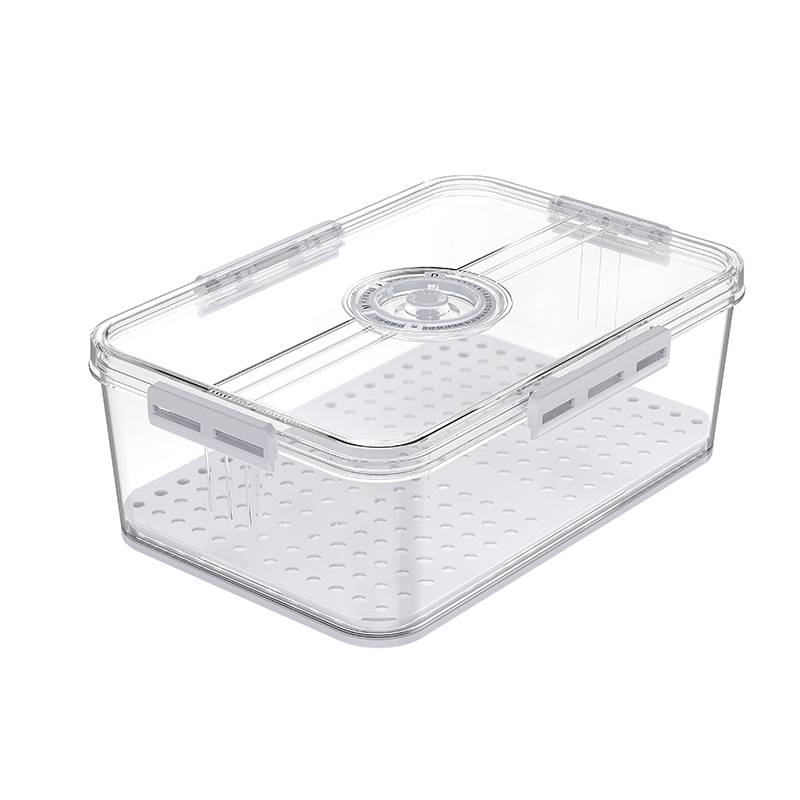
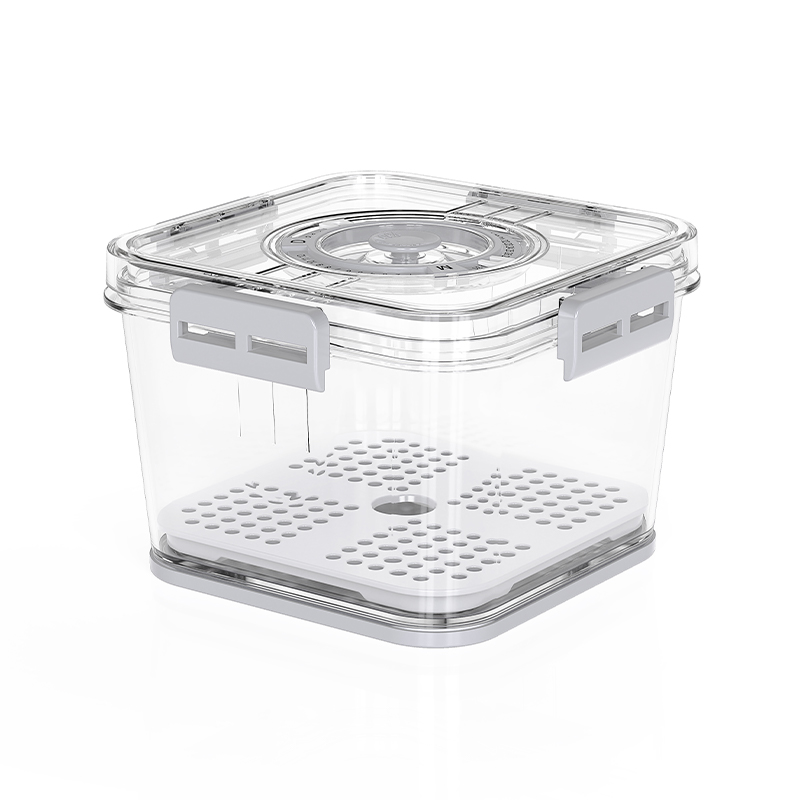
Cold shelves are the harshest test: condensation, 4 °C air, and a weekly reshuffle as shopping arrives. Here the divider question is really a freshness question, because food that is separated drains better and is found faster. A stackable box with a drain board often does more for shelf life than an extra panel.
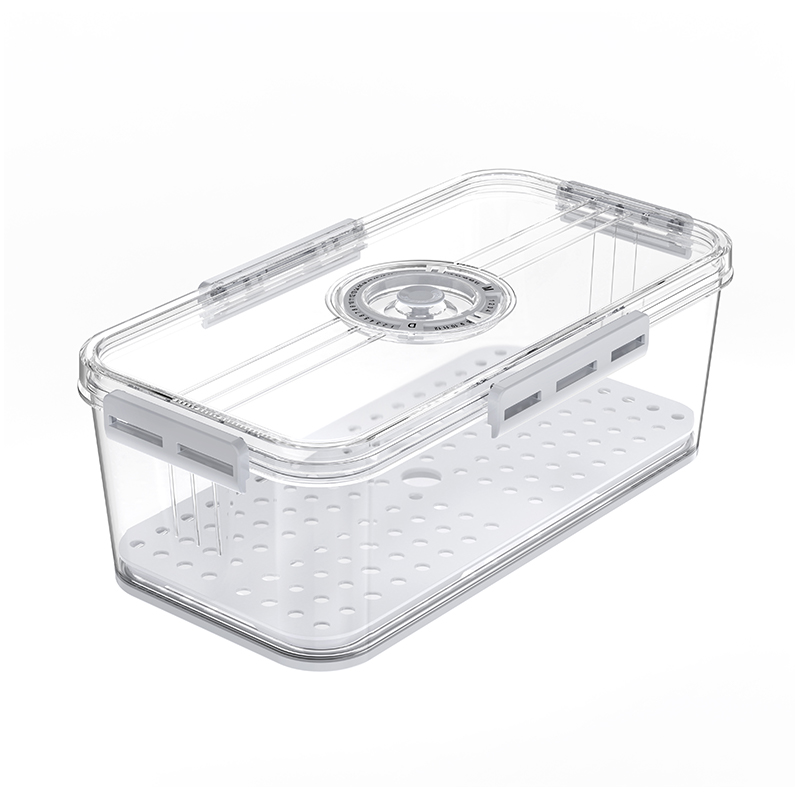
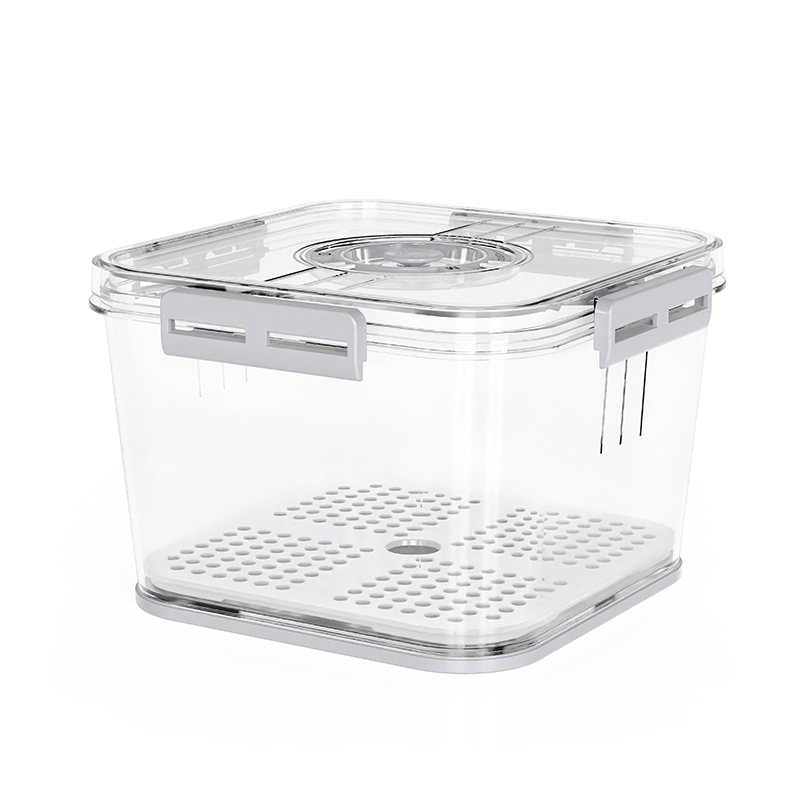
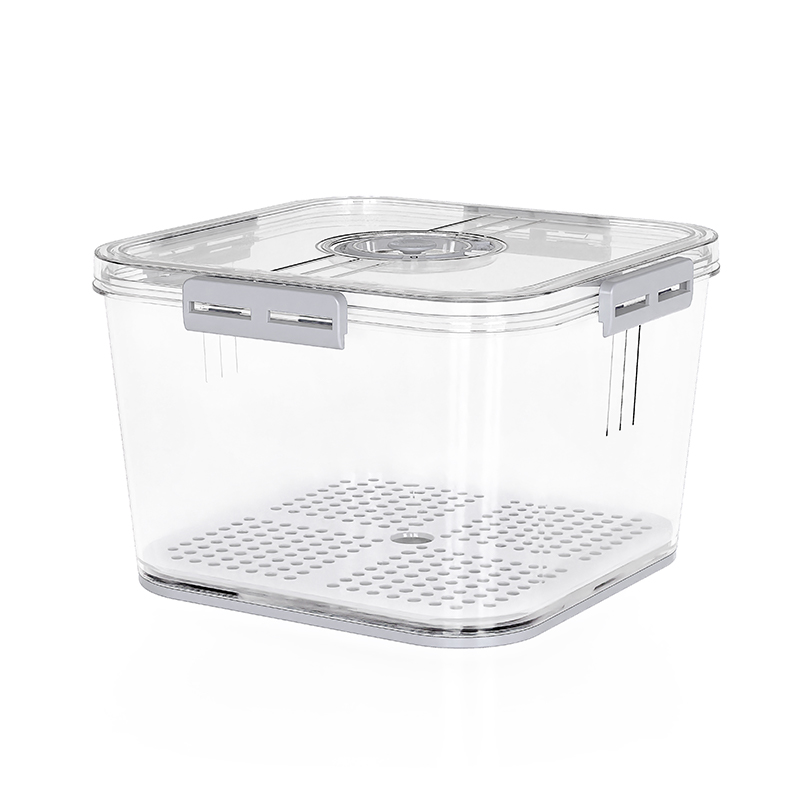
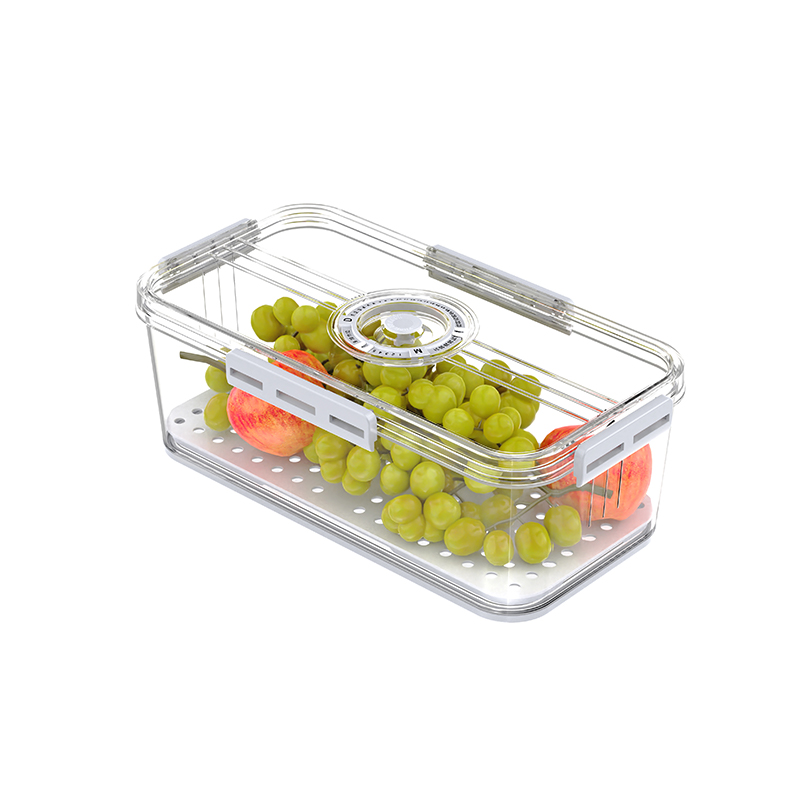 Medium Stackable Clear Fridge Storage Box with Drain BoardA clear stackable fridge box with an integrated drain board, designed to separate produce, improve air circulation and make cold-shelf storage easier to check.View Product →
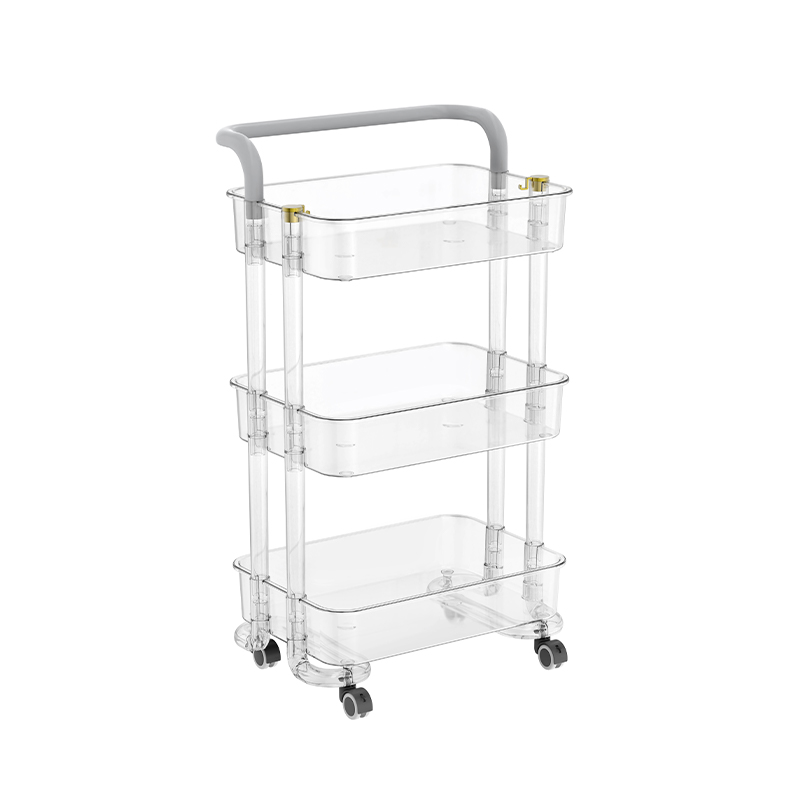
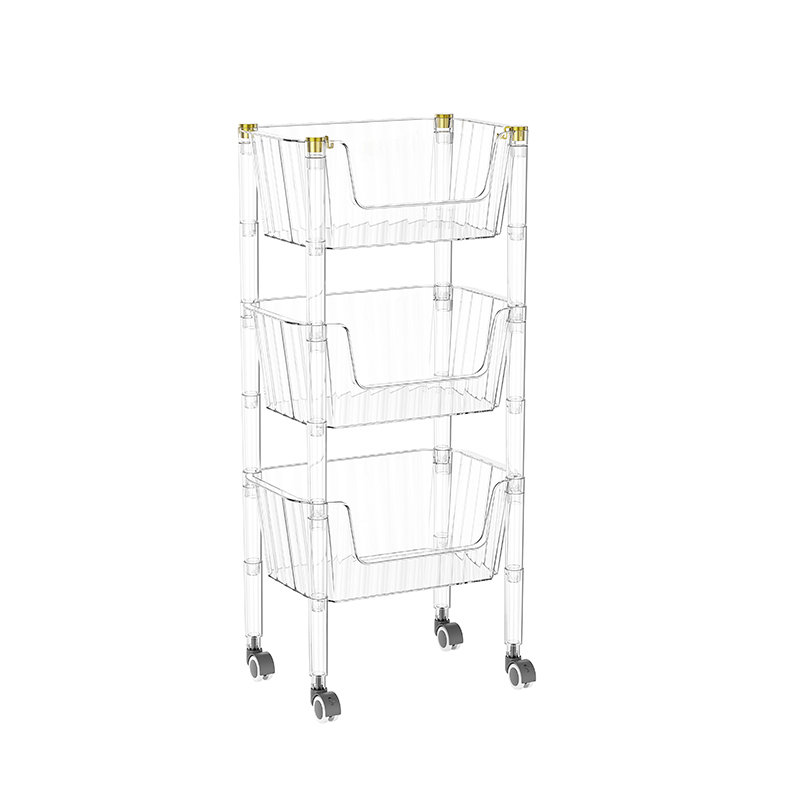
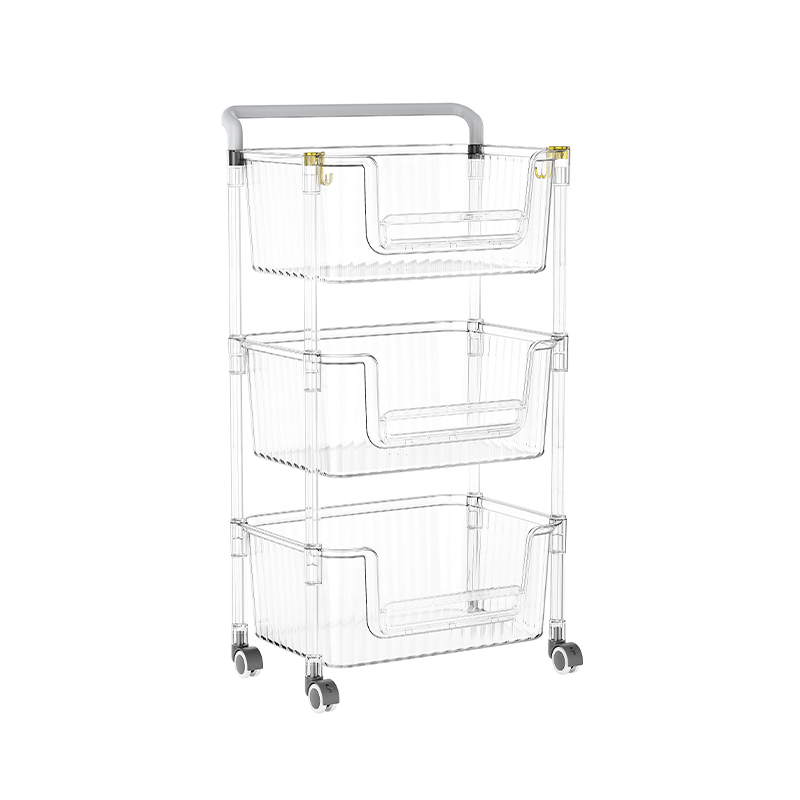
Once storage moves off the counter and onto the floor, the divider question becomes a shelf question. Height adjustment, wheel clearance and the ability to fold flat between seasons usually decide the purchase, and a clear body saves the fifteen minutes you would otherwise spend opening every tier.
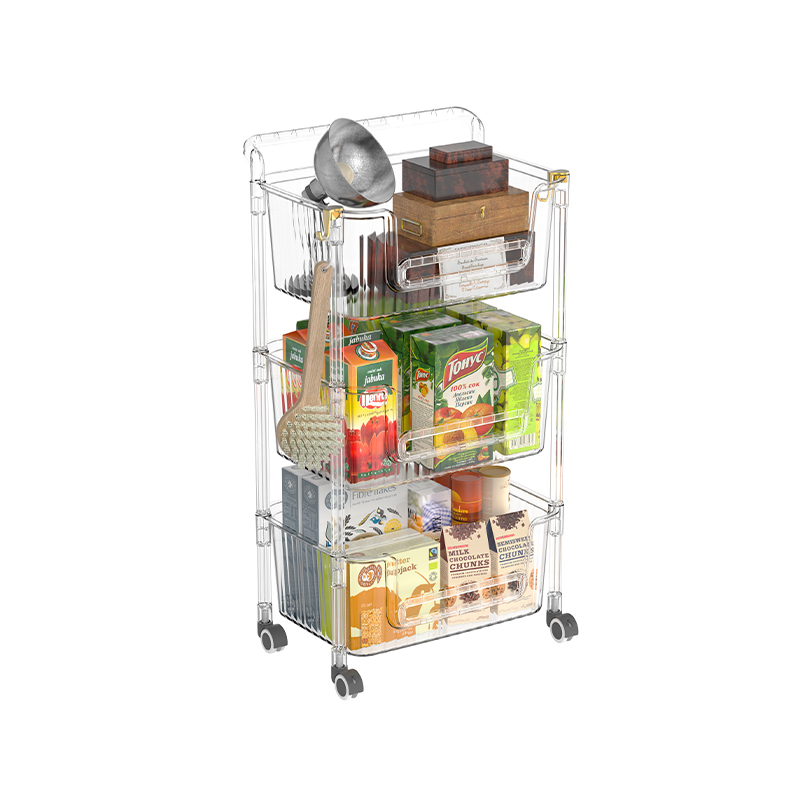 Adjustable Clear Three-Tier Storage Cart with Swivel WheelsA clear three-tier cart with adjustable shelf heights and 360° casters, suited to comparing multi-room storage layouts by tier count and footprint.View Product →
For larger volumes, buyers tend to compare the whole range rather than a single SKU, because the same cart or cabinet has to serve several rooms. Our home plastic storage range groups these by tier count and footprint so layouts can be compared side by side.
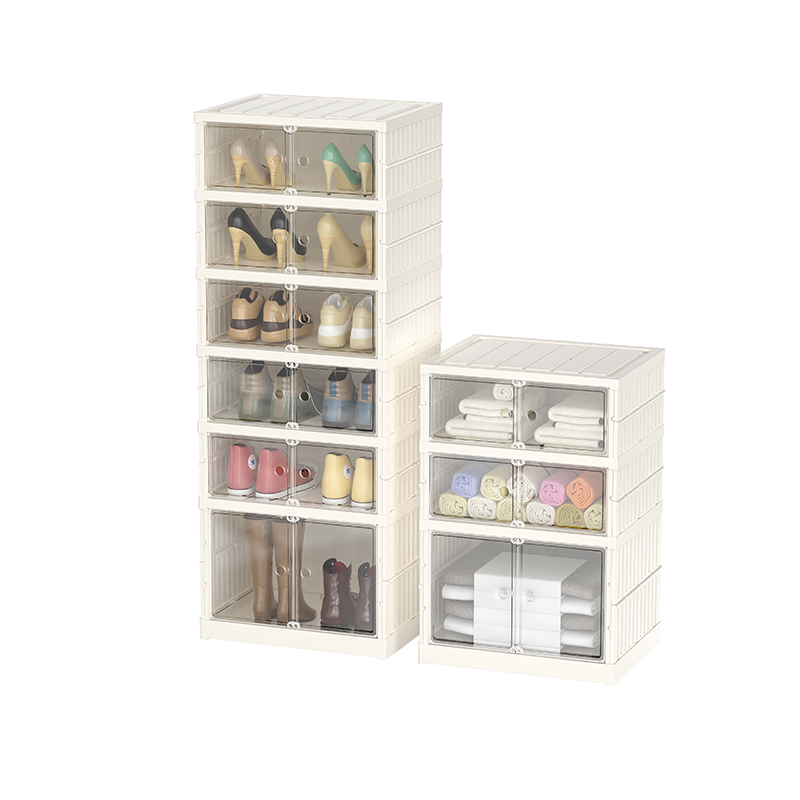 Multi-Purpose Six-Tier Foldable Storage Cabinet with Magnetic DoorsA foldable six-tier cabinet with transparent magnetic doors and no-tool setup, useful when comparing larger home storage ranges for vertical capacity.View Product →
Retail buyers and importers tend to learn these the hard way, after the container has sailed.
Nearly every complaint about adjustable boxes traces back to one of six details: rails too shallow to hold a tall item, divider feet that stop short of the base and let small parts slide underneath, sharp slot edges that catch a fingernail, lids that bow under a stacked load, condensation traps between panel and wall, and handles that add two centimetres the drawer does not have. Each is a molding decision worth a few grams of material, and each is far cheaper to fix at the tooling stage than in the after-sales inbox.
The practical rule is straightforward. If your contents change shape from month to month, pay for movable dividers and check the rail depth before anything else. If they never change, a fixed insert is stiffer, cheaper and easier to wipe clean. And whichever you choose, buy on internal dimensions and tested tolerances rather than on the compartment count printed on the box, because the number that decides whether the purchase works is the one measured with a tape inside the drawer.


Zhangqi Industrial Park, Cixi City, Ningbo City, Zhejiang Province

