
 Search for...
 English
 Español
 日本語
 한국어
 عربى
Multi-Purpose 6-Tier Foldable Storage Cabinet

A 32 cm closet shelf and a 45 cm deep drawer decide more about whether a home furnishing storage box works than any litre figure printed on the label. Most shoppers start with capacity, then discover the lid domes too high to stack, the base flexes under a pile of sweaters, or the casters add 8 cm the shelf simply does not have. The reliable order is footprint first, access direction second, load path third, and capacity last.
The sections below walk through that check step by step, then explain what PET, PP and ABS actually change once the box is home, full, and asked to survive a few hundred open-and-close cycles.
Four measurements eliminate most returns. Take the clear gap between shelf and shelf, the swing arc of the nearest door or the full pull-out depth of a drawer, the floor-to-ceiling height where a tall unit will stand, and the recess under the lowest shelf in case the box arrives on wheels.
Then apply tolerances rather than exact numbers. Leave 20–30 mm of headroom above a stack so fingers can grip and lift a lid; leave about 10 mm at each side so the box does not have to be wedged in; add the caster height, typically 6–10 cm, to any wheeled unit; and give a pull-out drawer its full depth plus a hand's width in front. A box that fits with zero clearance is a box you will stop using by the second week.
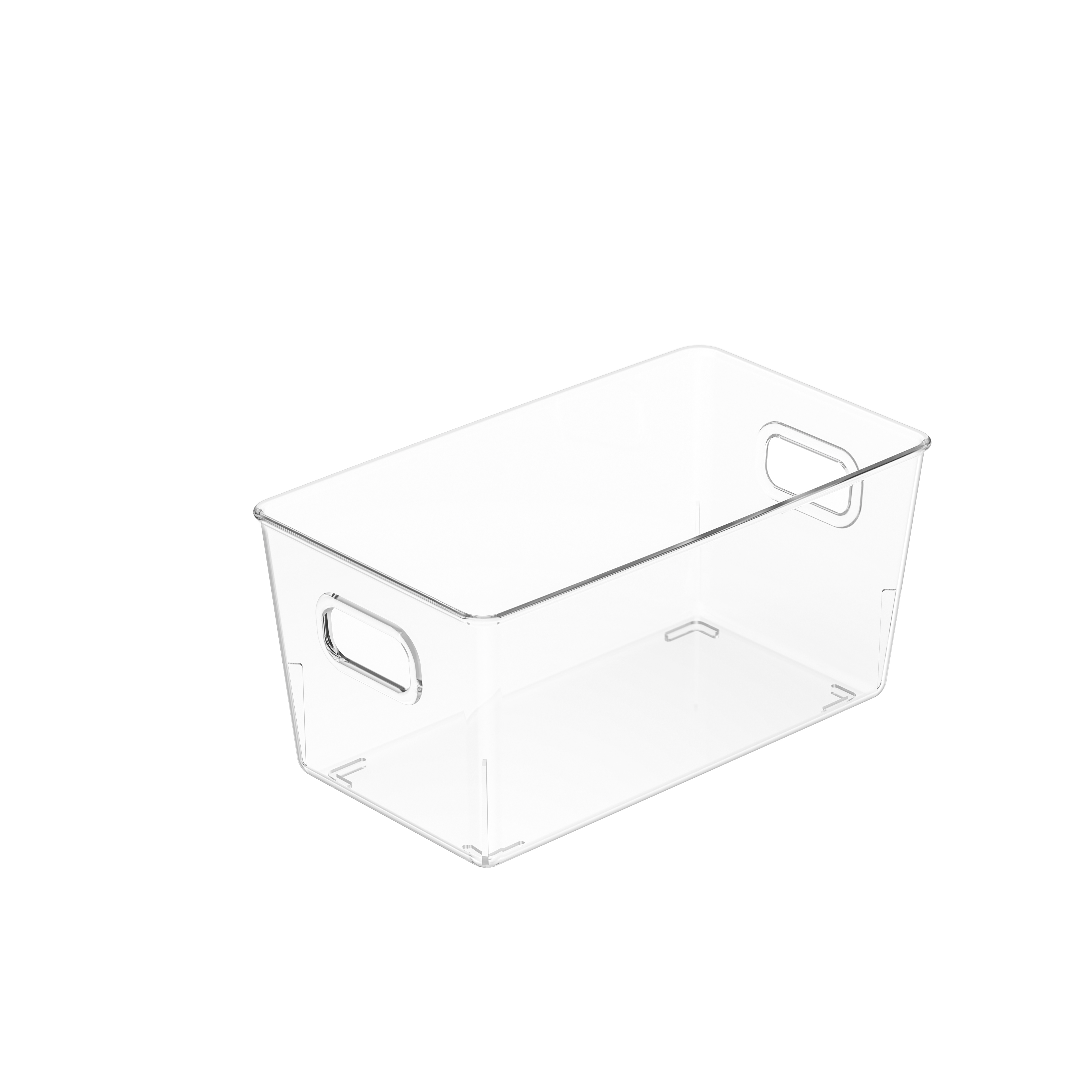
Shape matters as much as size. Straight-sided boxes stack cleanly and use the full gap between tiers, while tapered boxes designed to nest for shipping leave a wedge of dead air in every layer. If the plan is a three-high stack, buy straight walls and flat lids.
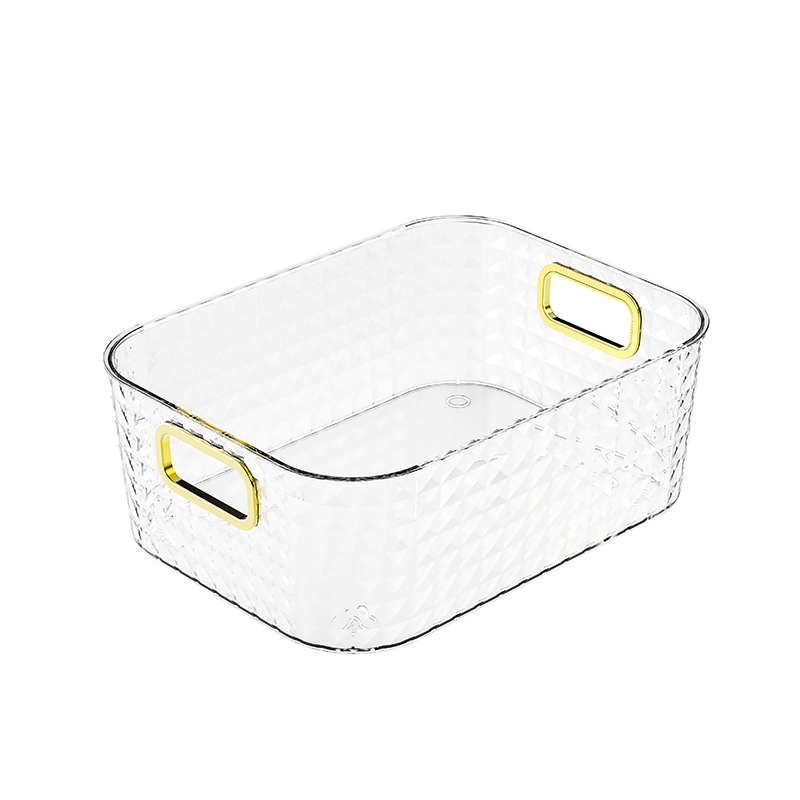
Material decides clarity, how the box behaves under impact, and whether it belongs near food. PET is stiff and genuinely clear, which is why it suits drawer fronts, fridge boxes and anything where you want to see the contents without lifting a lid. PP is softer and more forgiving: it absorbs knocks, survives repeated hinge flexing and usually reads as translucent rather than glass-clear. ABS is hard and dimensionally stable, so it turns up in frames, drawer runners and decorative trim rather than in walls that need to flex.
The trade-off is rarely about strength alone; it is about where the part flexes. A PET wall that is repeatedly twisted at a clip point can craze over time, while a PP wall in the same position simply bends. If you want the fuller comparison, this breakdown of how PET and PP differ in clarity and impact behaviour is worth reading before you commit to a drawer unit.
One rule is not negotiable: keep food-contact and general storage separate. A box sold for fridge or pantry use should be made of food-grade material; a closet bin, however clean it looks, should not be repurposed for leftovers.
| Material | Clarity | Impact behaviour | Best suited to | Watch out for |
|---|---|---|---|---|
| PET | High, glass-like | Rigid; can craze at flex points | Fridge boxes, visible drawer fronts, pantry bins | Avoid dropping when cold; do not over-twist clips |
| PP | Translucent to opaque | Softer, absorbs knocks well | Lidded bins, hinged lids, laundry and toy storage | Scratches show; light colours can dull over years |
| ABS | Opaque, uniform | Hard and stable, less forgiving | Frames, runners, trims, modular connectors | Brittle under sharp impact; not for flexing parts |
| Bamboo-fibre composite | Matte, warm tone | Moderate, depends on binder | Bedroom and living-area storage on show | Keep away from standing water and long damp spells |
Two boxes can look identical in a photo and behave completely differently after a year. The difference usually sits in wall thickness, base ribbing and lid flatness. Press the centre of the base with a thumb: a panel that flexes 3–4 mm under light pressure will bow noticeably once it carries a full load, and a bowed base transfers weight to the corners instead of the ribs.
Set a loaded box on a flat floor and check for rocking. A box that rocks has a base that is not planar, and in a stack that wobble multiplies upward. Lid flatness matters for the same reason: a domed or recessed lid concentrates the load of the box above onto a small ring of plastic rather than spreading it across the surface.
Practical stacking rules that hold up in real homes:
Clear walls do quiet work: they cut the number of times a lid comes off, and each avoided opening is a small saving in wear on hinges and clips. In the kitchen the same logic applies with higher stakes, because an opaque container hides what is about to spoil.
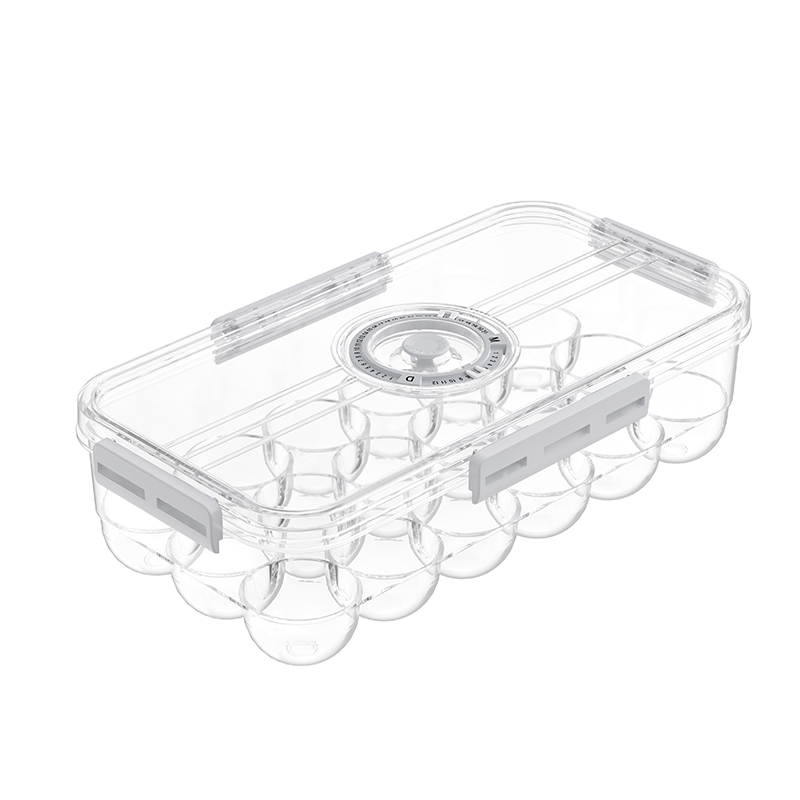
That is why timer dials and time-tracker lids have moved from novelty to practical. A dated lid on a fridge box or an egg bin removes the guesswork about when something went in, and a drain board underneath keeps produce out of standing moisture. For a household that cooks most nights, those two details do more for food waste than a larger box would.
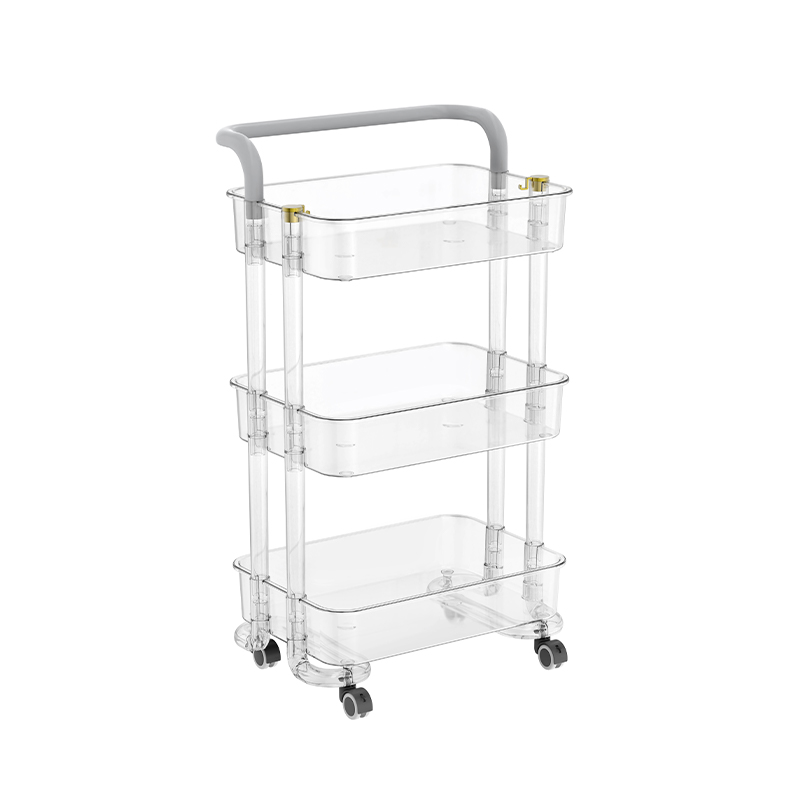
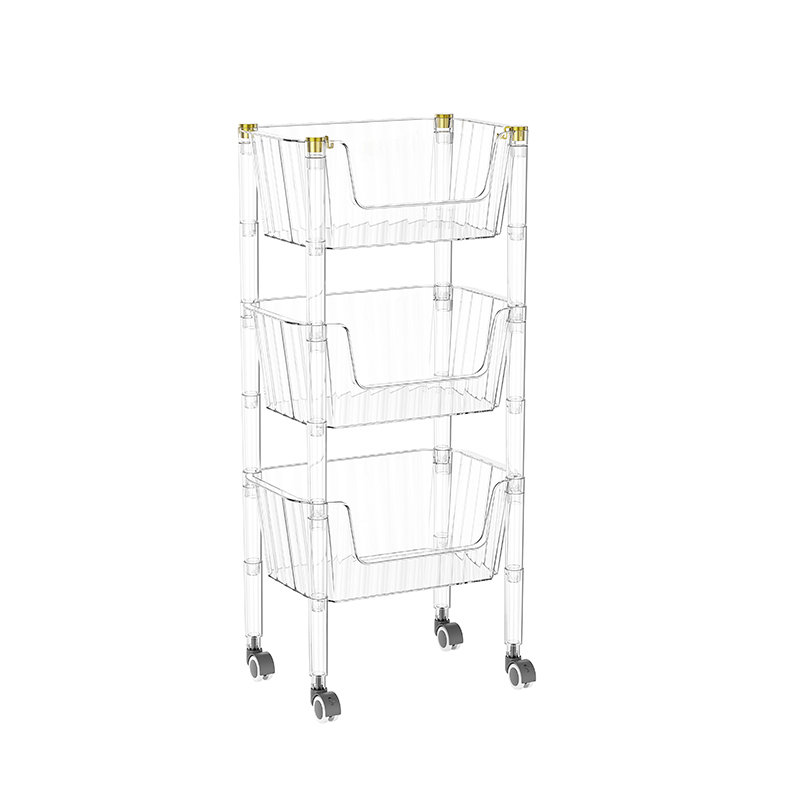
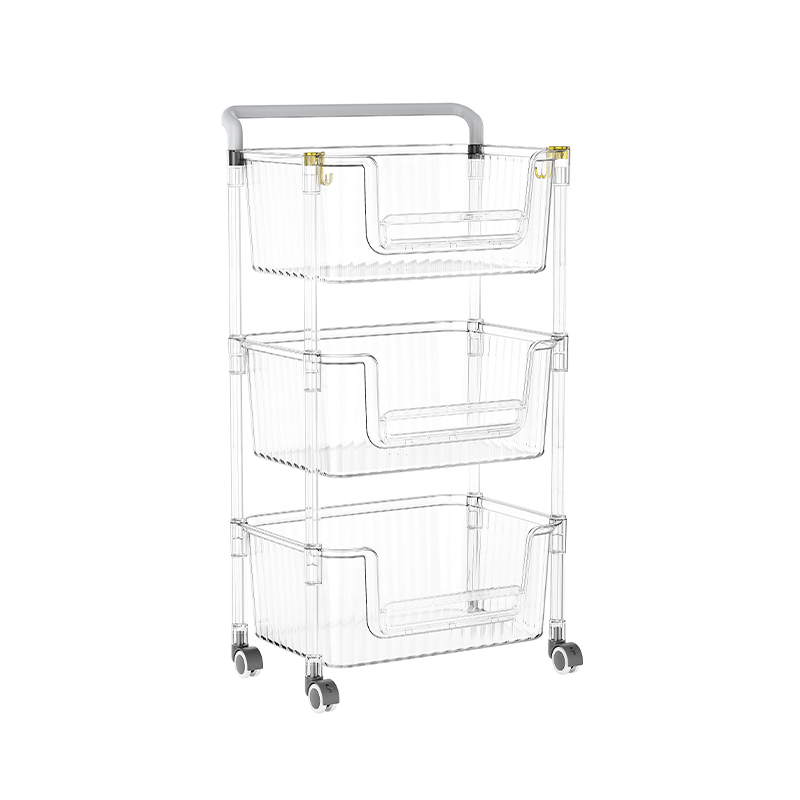
In a bedroom or hall closet, the constraint is usually depth and access. A clear three-drawer utility cart works where a lidded bin does not, because each drawer pulls out toward you and the contents stay visible from the side. It suits folded clothing, accessories and the small items that otherwise migrate to the floor.
 Clear Three-Drawer Mobile Utility Cart with WheelsA compact clear cart with pull-out drawers and wheels, useful in bedrooms or hall closets where visible, easy-access storage matters.View Product →
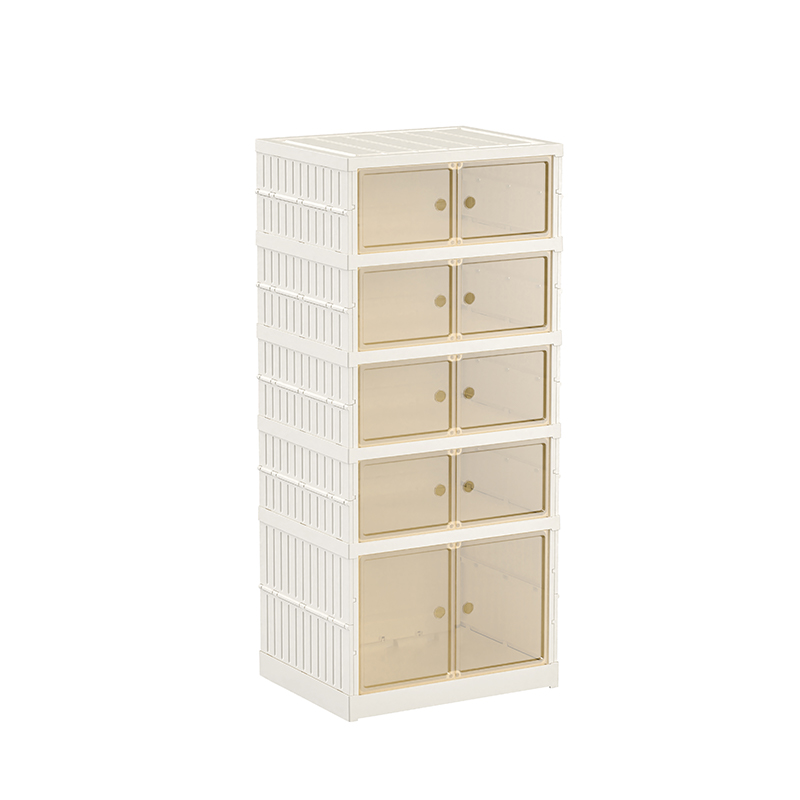
Small flats and rented rooms reward furniture that disappears. A six-tier foldable cabinet assembles from flat panels, so it can be broken down for a move instead of being abandoned, and the tiered format uses vertical space that a single low box wastes.
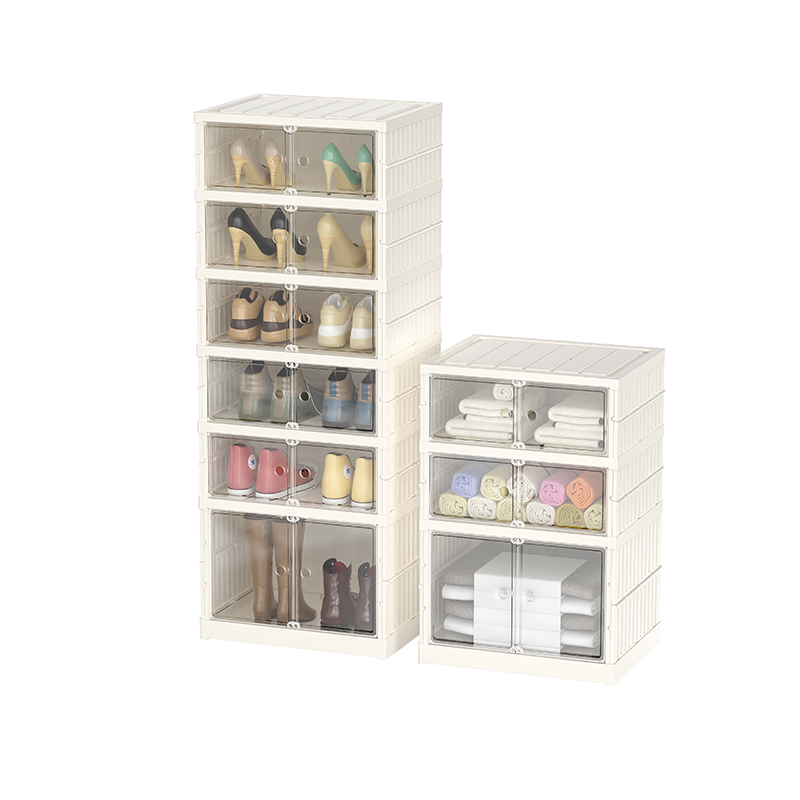 Six-Tier Foldable Storage Cabinet with Transparent DoorsA foldable, no-tools cabinet that adds vertical storage for shoes, clothes, or bedding and can be packed flat for moves.View Product →
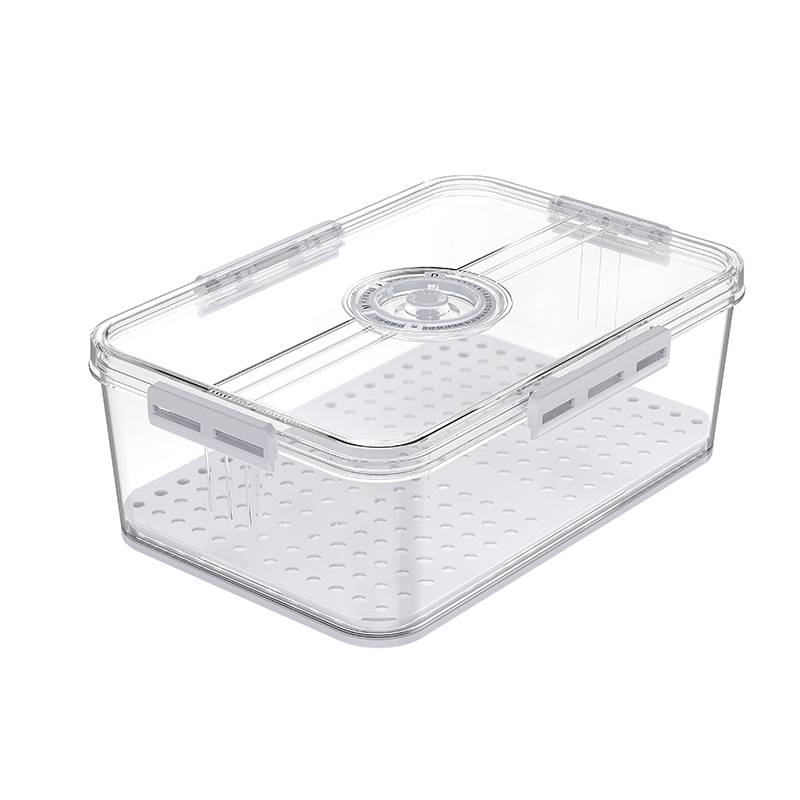
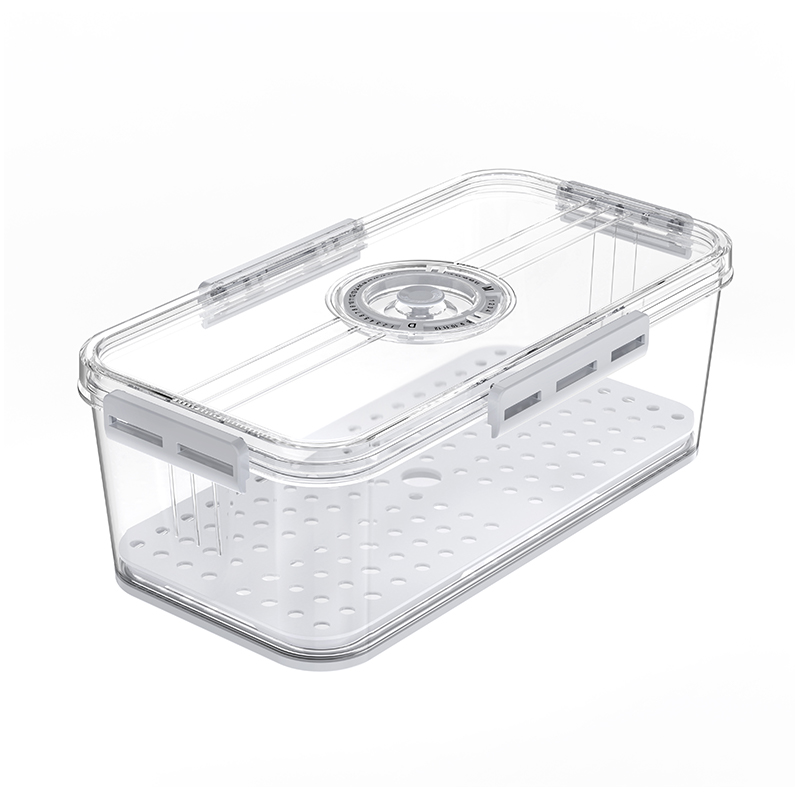
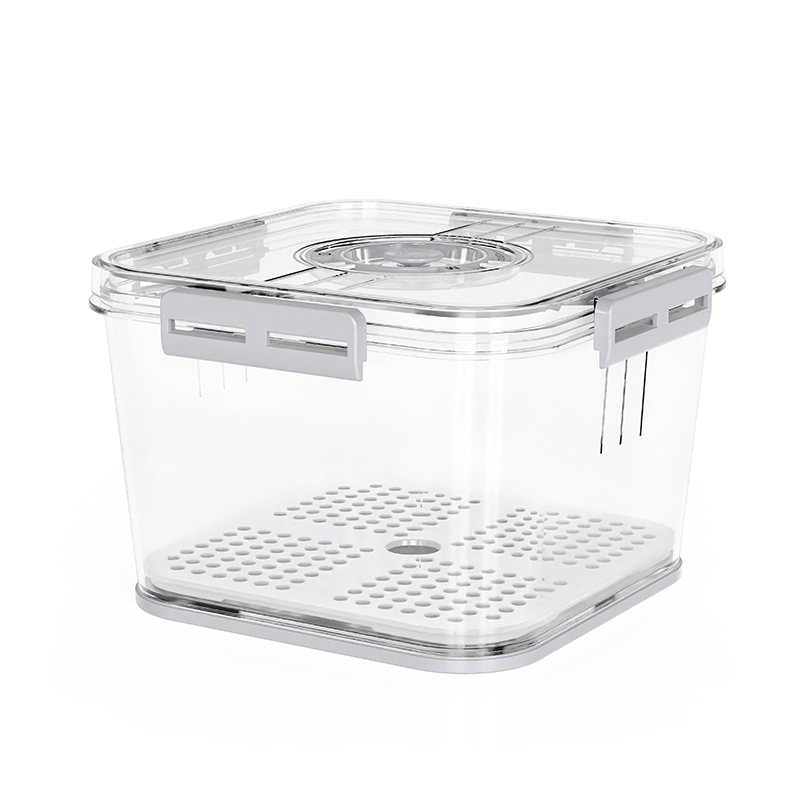
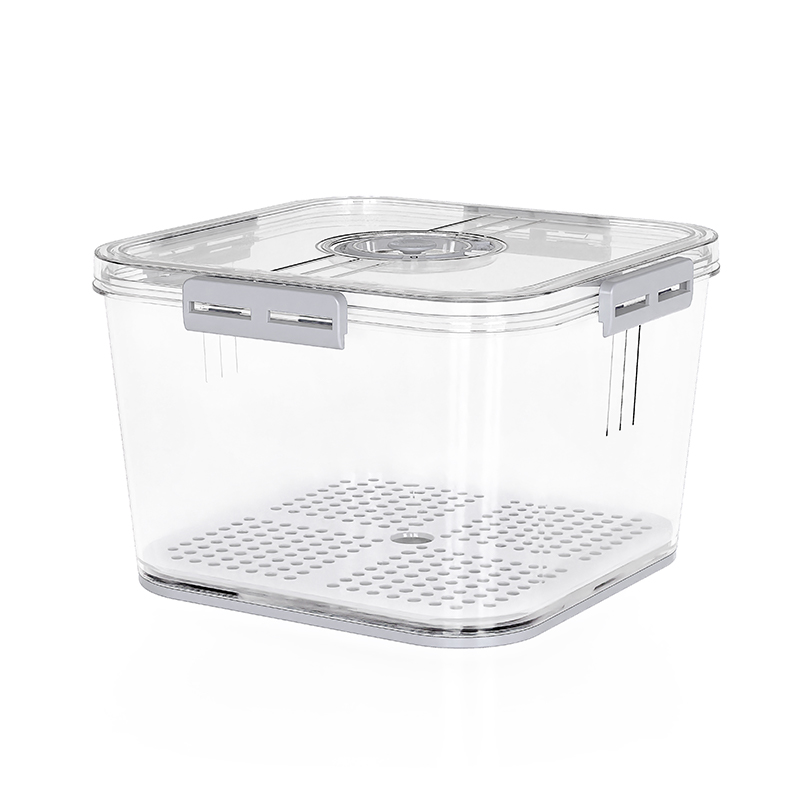
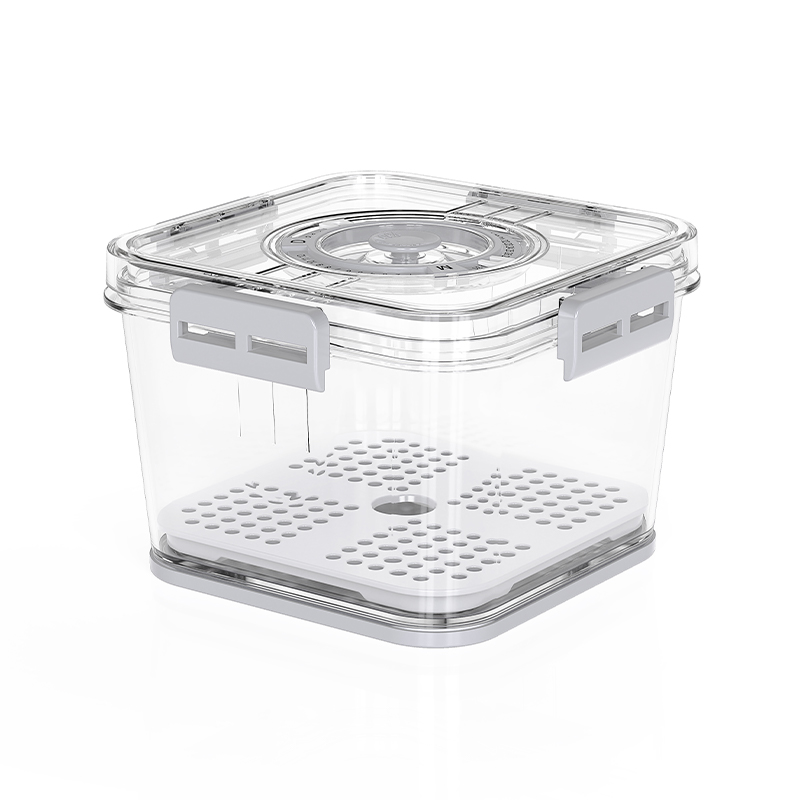
In the kitchen, buy for the fridge first and the cupboard second. A stackable PET box with a drain board handles washed produce and leftovers in the same footprint, stacks without wobbling on a glass shelf, and lets you see what needs eating first.
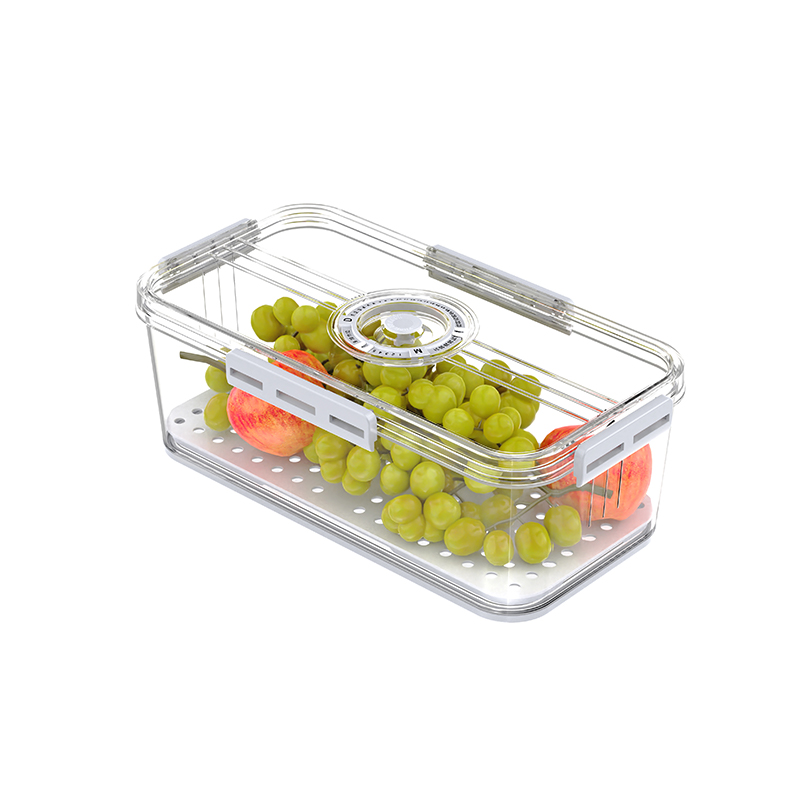 Stackable PET Fridge Storage Box with Drain BoardA clear stackable fridge box with a drain board, helping organize produce or leftovers while keeping contents visible and shelf space efficient.View Product →
None of these steps takes more than a few minutes, and together they remove almost every reason a storage box ends up in a cupboard, empty, holding nothing but regret.
Orgwiser manufactures home, kitchen and beauty storage lines in Ningbo, working in PET, PP, ABS and bamboo-fibre composites, and the same tolerance thinking applies at the factory as at the shelf: straight walls, flat lids and ribs where the load actually travels. Buy the box that fits the space you measured, and capacity stops being a marketing number and starts being a number you can use.


Zhangqi Industrial Park, Cixi City, Ningbo City, Zhejiang Province

