
 Search for...
 English
 Español
 日本語
 한국어
 عربى
Multi-Purpose 6-Tier Foldable Storage Cabinet

Two weeks into a humid July, a sample box comes back from a customer with a photo attached: the bamboo lid has lifted at one corner and no longer sits flush on the rim. The body is fine. The gasket is fine. The lid moved, and the whole program is now on hold pending a re-quote.
That photo is the short version of what a bamboo lid transparent box asks of a buyer. The transparent body, usually PET, PP or acrylic, is the predictable half of the product. The lid, the gasket groove and the gap between lid and rim decide whether the box keeps its fit through container shipping, retail shelf time and a few hundred openings in a kitchen. Put those three interfaces into numbers on the purchase order and the product is genuinely straightforward to make. Leave them as "natural look, airtight" and the returns arrive by autumn.
A bamboo lid transparent box is not one material decision, it is three, and they fail in different ways.
The phrase "bamboo lid" hides the most consequential distinction on that list. Solid bamboo is a wood product: it swells and shrinks across the grain with humidity. A composite lid is mostly plastic and moves far less, but exposed machined edges can still take up water. A veneered MDF core is the cheapest option and the least forgiving, because the first chip at a corner exposes an absorbent substrate that no surface finish can protect.
The commercial logic is simple. A clear body lets the buyer see rice, pasta, coffee beans, cotton pads or hardware without opening the lid, while the bamboo top gives the product a warm, non-plastic look that photographs well on a shelf or a marketplace listing. That combination supports a higher retail price than an all-plastic box of the same volume.
The failures are equally predictable, and they cluster in four places: lid swelling that changes the fit, gasket compression set that turns a snug closure into a loose one after a few months of storage, clarity loss from scuffing during transit, and cleaning claims that the lid cannot survive. Every one of those is controllable at the specification stage rather than the complaint stage.
Clarity and heat exposure usually settle the body question. PET gives the best transparency-to-cost ratio and is the natural fit for dry goods and fridge storage, but it softens around 60 to 70 °C and should not be filled with hot liquid. PP tolerates near-boiling contents and dishwashing but reads slightly hazy. Acrylic is the most optically brilliant of the three and the most brittle, and alcohol-based cleaners can craze it over time. Buyers weighing the first two will find a closer comparison in this note on PET versus PP in transparent storage.
| Property | PET | PP | Acrylic |
|---|---|---|---|
| Optical clarity | High | Medium to high | Very high |
| Continuous use temperature | About 60–70 °C | About 100–120 °C | About 65–75 °C |
| Dishwasher body | Usually acceptable, top rack | Acceptable | Not recommended |
| Impact behaviour | Stiff, can crack on sharp impact | Tough, deforms before cracking | Brittle, chips at edges |
| Best-fit contents | Dry goods, fridge items | Warm or oily foods, general storage | Cosmetics, display use |
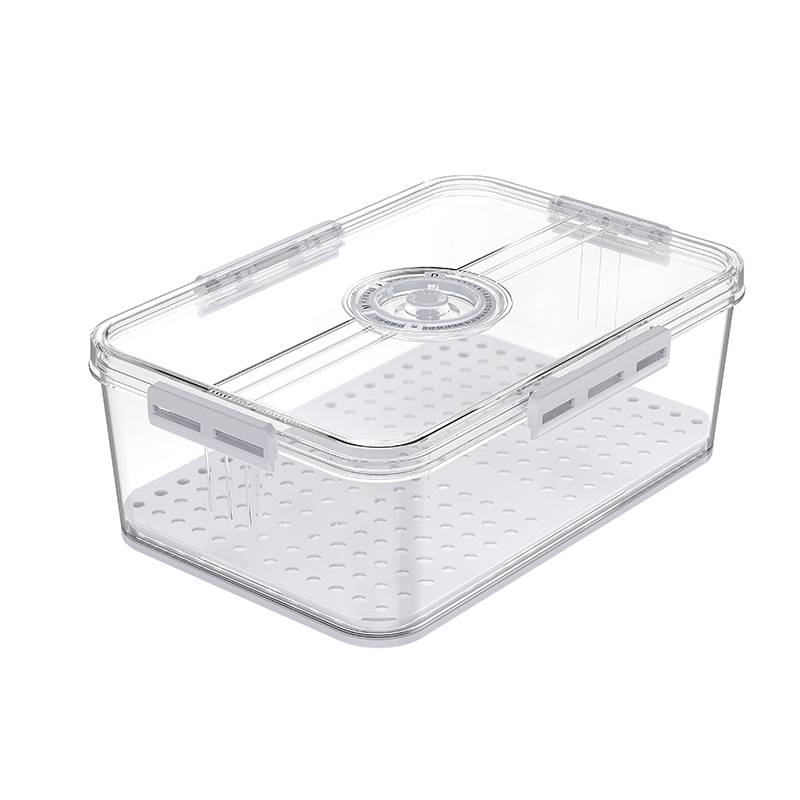
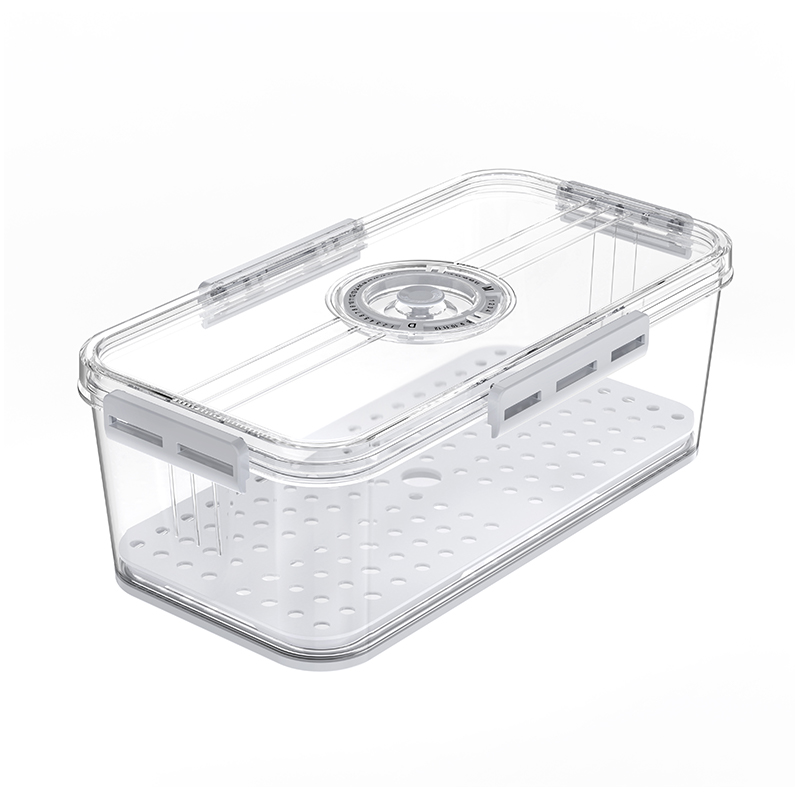
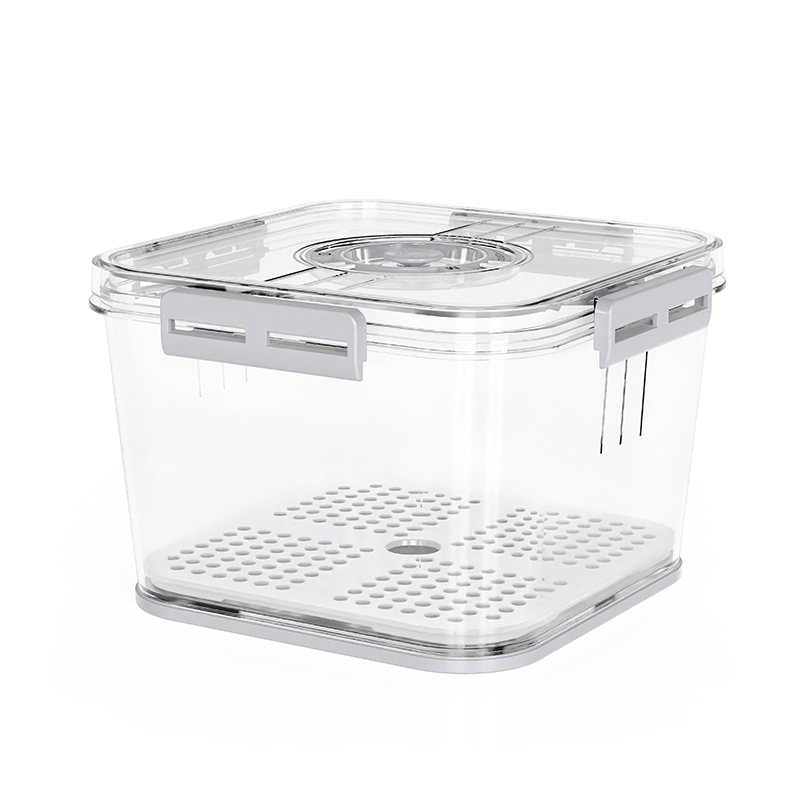
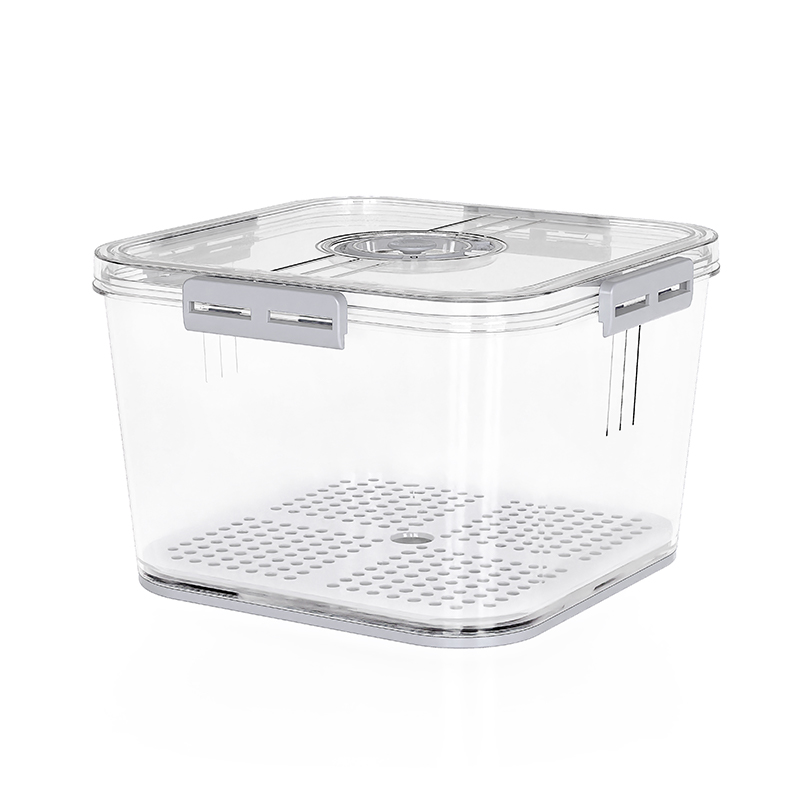
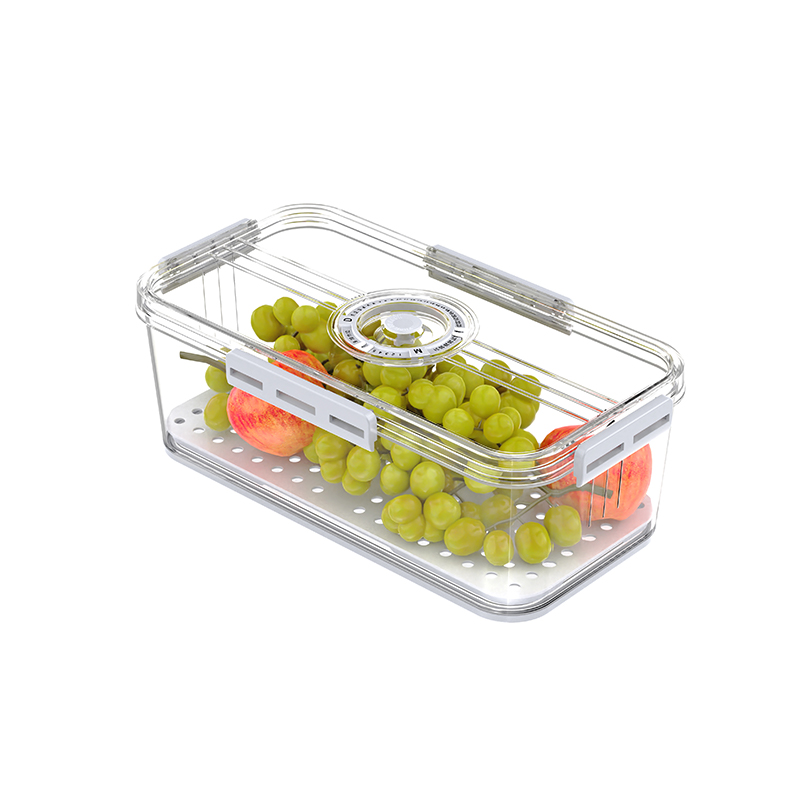 Stackable Clear PET Food Storage Box with Drain BoardFor buyers comparing transparent fridge storage, this stackable box adds a drain board to lift produce and limit moisture, with clear PET for easy identification.View Product →
Most fit complaints trace back to a purchase order that described appearance but not geometry. These are the figures worth writing down and agreeing with the toolmaker before steel is cut.
Three different claims get used interchangeably and they are not the same. Leak-proof means liquid does not escape when the box is tipped. Airtight means gas exchange is effectively blocked, which usually requires a latch or a clamp to hold compression over time. Moisture-resistant means the contents stay dry under normal kitchen humidity, which a single silicone ring on a bamboo lid can often achieve.
Be realistic about the last one. A friction-fit bamboo lid with one gasket is leak-resistant and moisture-resistant; calling it airtight invites a test the product will fail. If vacuum or long-term freshness is the selling point, specify a mechanical latch, and write the verification method into the order: fill level, inversion time, and the acceptance criterion. Vague adjectives are what turn a minor design compromise into a marketplace dispute.
Bamboo is hygroscopic, and no finish changes that permanently. A solid bamboo lid should be wiped or hand-washed and dried within about 30 minutes; left wet in a sink overnight, it will swell across the grain and the fit will change. A bamboo-fibre composite tolerates water better because the polymer matrix dominates, but machined edges and any exposed core remain the weak point.
This is why "dishwasher safe" should be split. The body usually is. The lid usually is not, and a gasket that survives 65 °C wash cycles may still take a set after repeated drying cycles. A defensible claim reads: dishwasher-safe body, hand-wash lid, dry thoroughly before resealing. It sells just as well and it does not generate returns. A light food-grade oil applied a few times a year keeps a solid bamboo lid from drying and checking at the ends.
There is a specific trap here that catches experienced buyers. Under EU plastics regulation 10/2011, bamboo powder is not an authorised additive, so a lid marketed as a "bamboo fibre" food-contact plastic can be a compliance problem in the European market regardless of how natural the marketing sounds. Solid bamboo used as a wood contact material sits under a different framework, but the oil or lacquer finish and the silicone gasket still need their own food-contact documentation.
Ask for the paperwork before the samples: a declaration of compliance for the body resin, migration test reports from a recognised laboratory, and a food-contact statement for the silicone covering the relevant regulation for the destination market. Where the lid is composite, ask the factory to state the bamboo loading percentage and confirm the base polymer grade. Suppliers who cannot answer that question in writing usually cannot answer it in production either.
Split sourcing is where most of these tolerances fall apart. When the box comes from one supplier and the lid from another, nobody owns the 0.4 mm gap between them. Ningbo Orgwiser Plastic Products Co., Ltd. produces both sides of that interface in-house: the company runs 50 general injection moulding machines and 6 auxiliary units across a 20,000 m² facility in Cixi, Ningbo, with material development covering PET, bamboo fibre and acrylic, and a production floor that is fully automated for material, water, electricity and gas supply.
That combination matters for this product category specifically, because the lid and the rim are designed against each other rather than negotiated between two factories. The same capability supports adjacent lines in the kitchen storage range, where stackable PET boxes, drain boards and time-tracking lids share tooling and quality control.
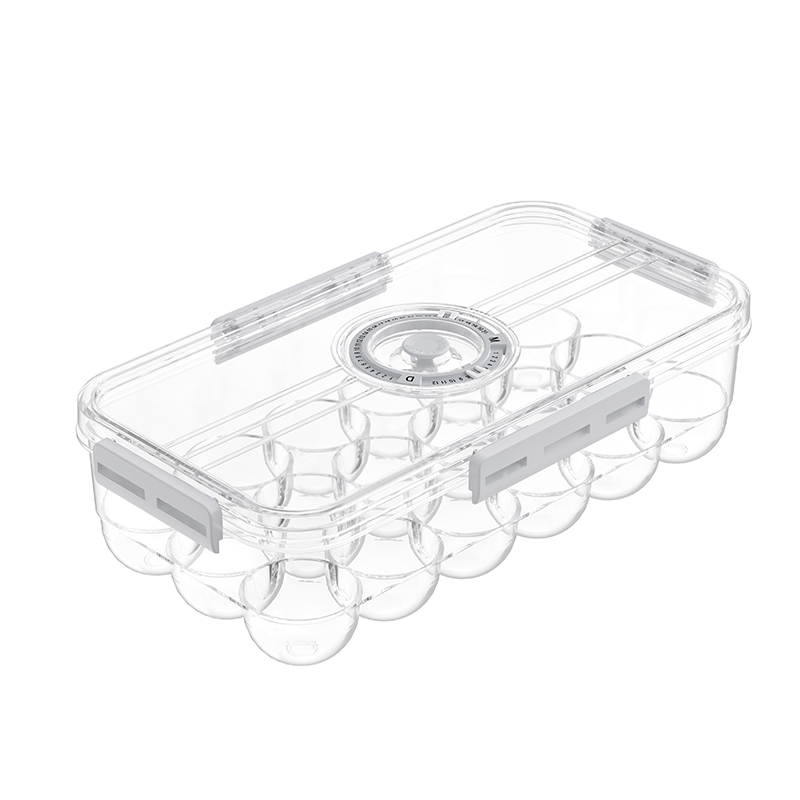
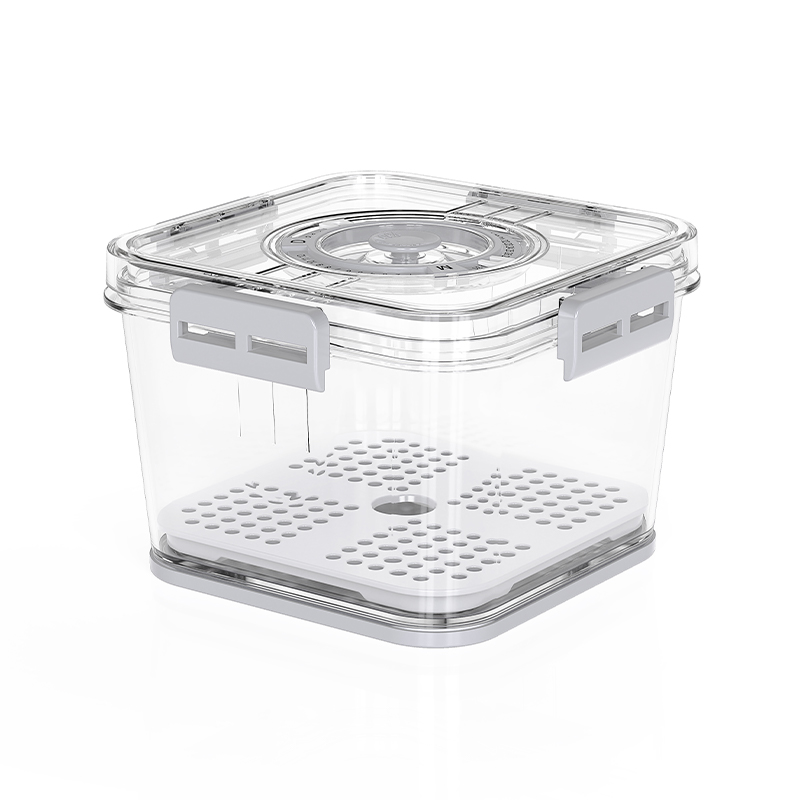
 Small Clear Stackable Food Container with Optional TimerA clear PETG body and optional lid timer make this stackable container useful for visible food storage, secure sealing, and stock rotation in kitchens.View Product →
The short conclusion is the one worth repeating to a sourcing team: with a bamboo lid transparent box, the transparent part is the easy conversation. Fix the lid moisture content, the flatness figure, the gasket compression and the cleaning claim in writing, and the natural-look lid stops being a risk item and starts being the reason the product sells.


Zhangqi Industrial Park, Cixi City, Ningbo City, Zhejiang Province

