
 Search for...
 English
 Español
 日本語
 한국어
 عربى
Multi-Purpose 6-Tier Foldable Storage Cabinet

A foldable storage box earns its place when your storage needs are real but not permanent. Garages, laundry rooms, pantries, closets, and kids' bedrooms all benefit from bins that stand tall when full and fold flat when empty. Judge a foldable box the same way you would a rigid one: material, build quality, and load capacity. A well-made folding box feels solid under weight, opens and closes smoothly, and survives hundreds of cycles without hinge failure.
Rigid bins keep their exact shape indefinitely, but they also keep the same footprint whether they hold two items or fifty. Foldable storage changes that equation. When seasonal decorations, out-of-season clothes, or camping gear go back into storage, the boxes collapse flat and free the floor for other uses. That flexibility matters most in apartments, RVs, dorms, and homes where one room carries several duties.
Foldable boxes are not the right answer for every job. Heavy tools, glass bottles, and items that need sealed, dust-proof protection for years belong in rigid bins. Use a foldable storage box where flexibility and quick access matter more than maximum rigidity.
When mobility is part of the organizing system, a wheeled cart keeps the most-used items close to where you work while the foldable boxes handle overflow and seasonal stock.
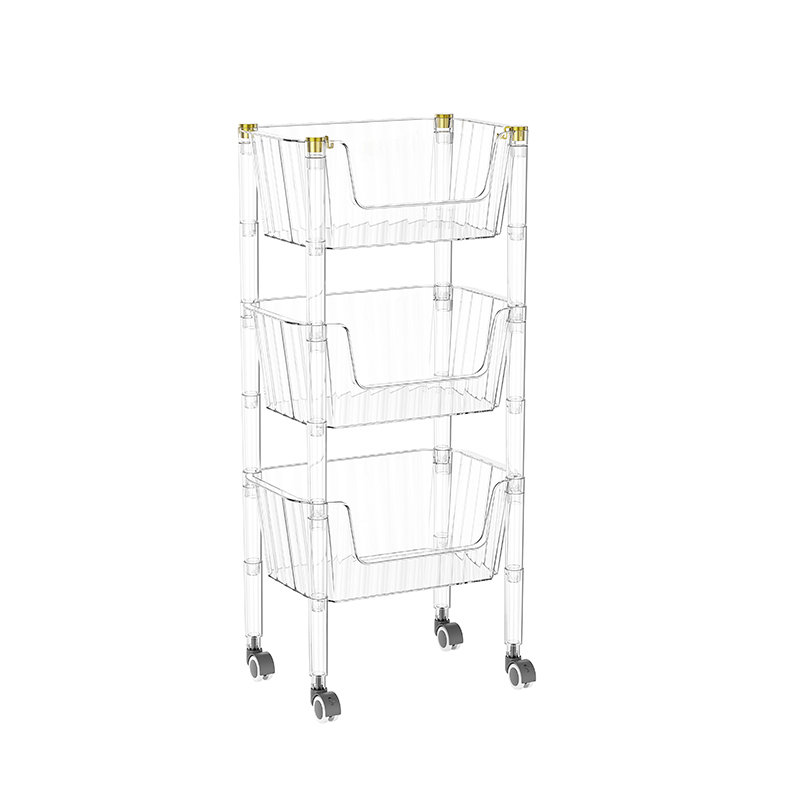
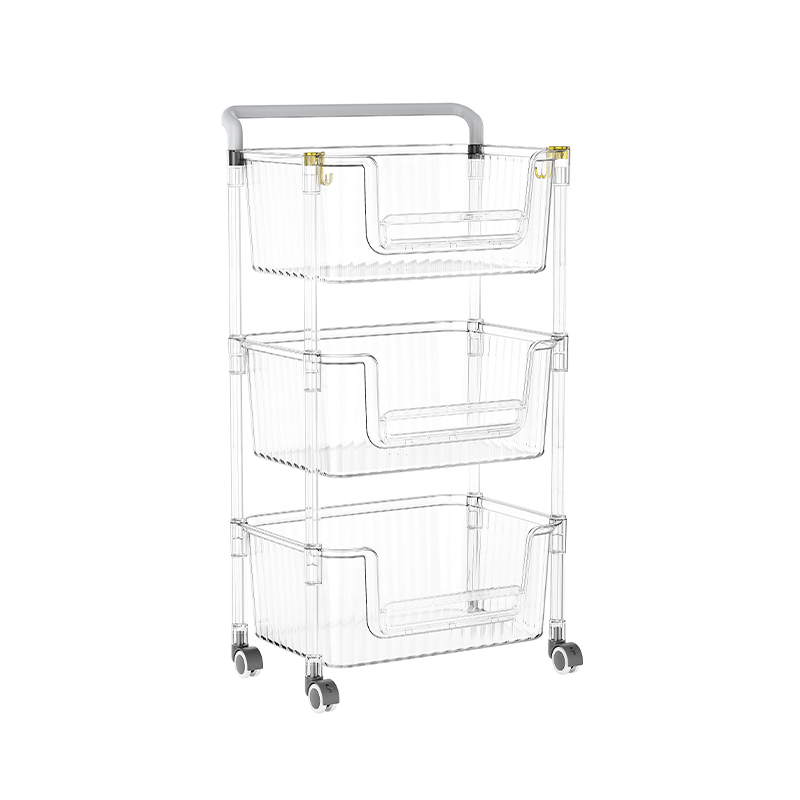
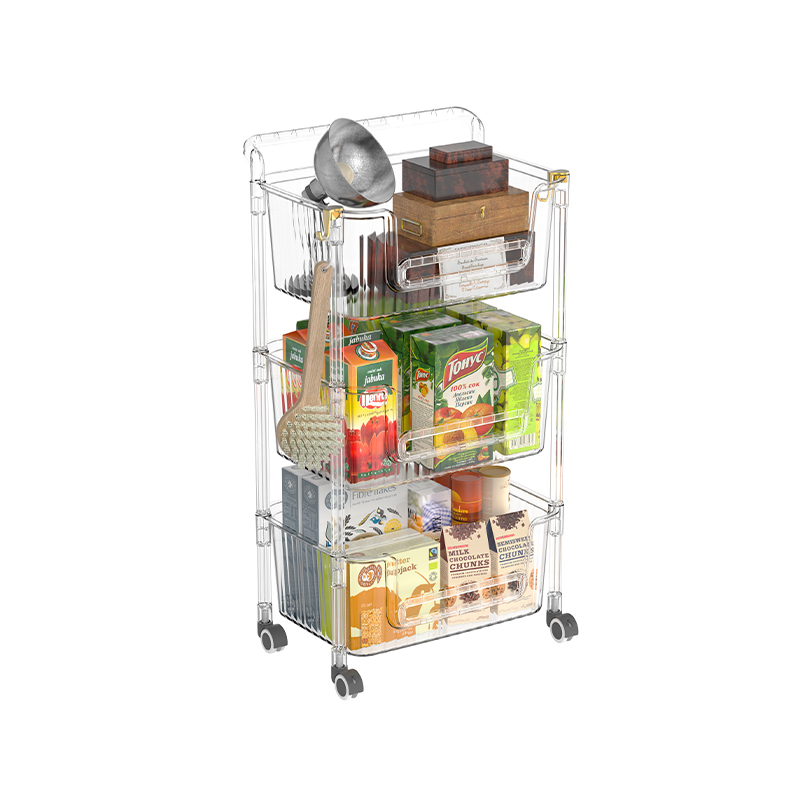 ORGWISER Adjustable Clear 3-Tier Storage Cart with WheelsThis wheeled cart offers transparent visibility and adjustable shelves, ideal for keeping frequently used items mobile across kitchen, office, or bathroom spaces.View Product →
For most household organizing tasks, a foldable box with a solid base is enough; comparing box, cart, and cabinet styles in the home plastic storage range will help you match the right shape to each room.
The material tells you how the box will age. Foldable storage boxes are molded from PET, PP, ABS, or bamboo-fiber composites, and each behaves differently under load, heat, and repeated folding. PET combines clarity with stiffness, PP balances cost and flexibility, ABS adds the most impact resistance, and bamboo-fiber composites give a natural finish that suits kitchen and pantry use.
| Material | Clarity | Stiffness | Impact resistance | Food contact | Best use case |
|---|---|---|---|---|---|
| PET | High | High | Medium | Yes when food-grade | Transparent storage where contents must stay visible |
| PP | Translucent | Medium | Medium-high | Yes | General household bins and budget-friendly folding boxes |
| ABS | Medium-high | High | High | Usually yes | Frames, carts, and heavy-duty stacking boxes |
| Bamboo fiber composite | Low | Medium | Medium | Yes | Kitchen and pantry bins where natural surface finish matters |
PET is the material to choose when visibility matters. A transparent PET box lets you see the contents without opening every lid, cutting the time spent hunting for craft supplies, pantry items, or tools. The trade-off is that PET panels scratch more easily than PP, so keep abrasive pads away from the clear surfaces.
ABS earns its place in the frame. It resists impacts better than PP and PET, which is why drawer units, carts, and multishelf cabinets use ABS frames with lighter panels. If you plan to stack boxes two or three high, confirm that the frame and locking feet are ABS or an equivalent reinforced material.
Bamboo-fiber composites sit in a different category. They are rigid, feel warmer than plastic, and appeal to households that avoid petroleum-based finishes, but they are heavier and less transparent. Use them where the box stays in one place and the surface look matters as much as the function.
The hinge area is where cheap foldable storage boxes fail first. Look closely at the joints before you commit.
A practical rule: a good foldable storage box folds to less than one-third of its expanded height and unfolds without forcing. If a hinge fights you on day one, it will only get worse.
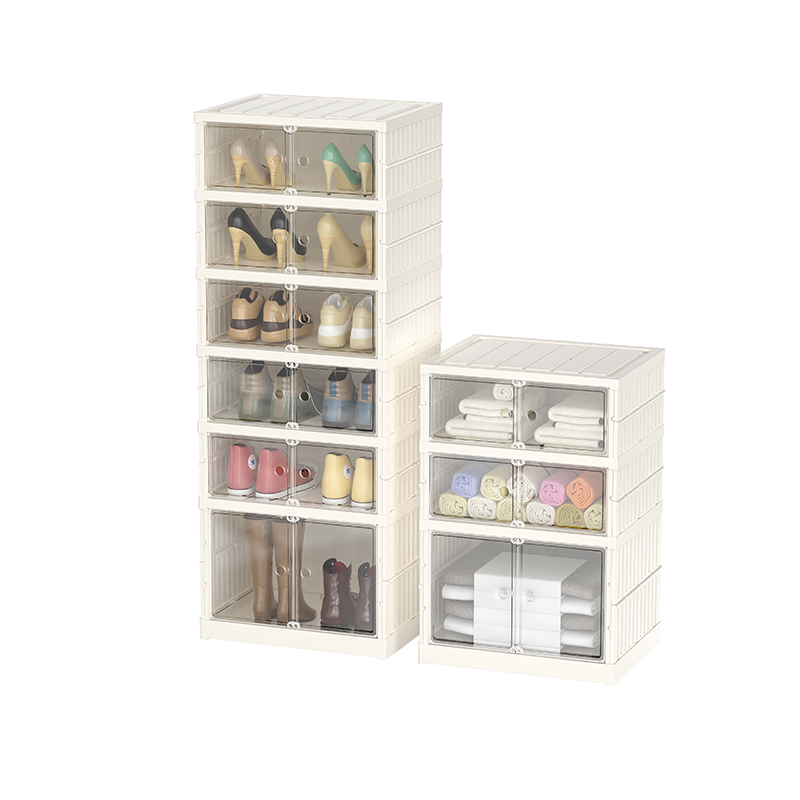 ORGWISER Multi-Purpose 6-Tier Foldable Storage CabinetA rigid-framed, collapsible cabinet with clear doors and magnetic closures, maximizing vertical storage while folding flat for seasonal storage needs.View Product →
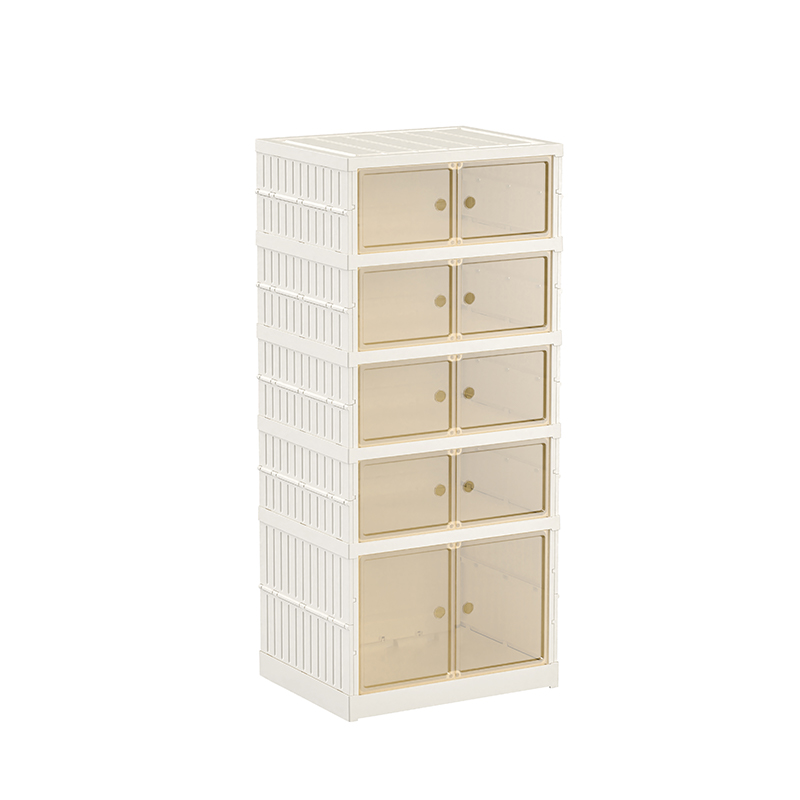
A multipurpose 6-tier foldable storage cabinet shows how a rigid outer frame and collapsing shelf structure keep the box square under load while still folding down to a slim package when the season changes.
Published load ratings only mean something when the whole structure carries the load, not just the base. The weak point is usually the connection between the wall panels and the floor of the box. For stacked storage, the bottom box carries the weight of everything above it, so the corners and base frame decide whether the stack stays square.
Stacking also depends on lid design. A flat, reinforced lid spreads the load from the box above; a flexible lid lets the upper box sink into the lower one and jams the contents. Look for lids with a lip that locks into the box below to keep stacks aligned.
Foldable boxes collect dust in the creases and joints faster than rigid bins. Clean them with warm water and mild detergent, then dry them completely before folding. On transparent PET panels, avoid abrasive scrubbing because micro-scratches fog the surface quickly. For pantry use, a vinegar-and-water wipe removes odors without leaving chemical residue.
Our maintenance guide for home plastic storage covers the full routine, including joint cleaning and label care, step by step.
Use this checklist to compare foldable storage box models on an equal basis.
A foldable storage box is a practical compromise, not a loss of quality. When you match the material to the load, check the joints, and measure the folded size, the folding box will outwork a rigid bin that spends most of the year standing empty. Start with the rooms you rotate most, whether that is the garage, the kids' closet, or the pantry, and you will feel the difference within one season.


Zhangqi Industrial Park, Cixi City, Ningbo City, Zhejiang Province

