
 Search for...
 English
 Español
 日本語
日本語
 한국어
한국어
 عربى
عربى
Multi-Purpose 6-Tier Foldable Storage Cabinet

Ask anyone who reorganized a kitchen in the past year what actually went wrong, and the answer is rarely a shortage of bins. It is lids that lost their bases, opaque boxes hiding forgotten leftovers, and a produce drawer that turned berries into liquid within days. Household storage containers exist to solve one problem—keeping contents visible, separated, and in good condition—and they only succeed when material, size, and features match the job. The conclusion comes first: choose by material and closure, then by size and placement, then by features. Color and trend finishes come last, if at all.
This guide breaks the decision into those three layers, adds a selection path that works in a store aisle or a supplier catalog, and closes with the care habits that decide whether a container lasts two years or ten. It draws on how food-grade plastic housewares are manufactured—PET, PP, ABS, acrylic, and bamboo fiber—and on the failure points that appear after months of daily use rather than in the product photo.
Shape is easy to adjust later; material is not. It determines food-contact safety, how long the walls stay clear, whether a box survives a drop onto tile, and how it can be cleaned. Five materials cover most household storage containers on the market today:
| Material | Clarity | Food contact | Typical uses | Watch-outs |
|---|---|---|---|---|
| PET | Glass-clear | Food-grade PET is a standard fridge-contact material | Fridge bins, produce boxes, clear drawers | Warps near boiling heat; hand wash |
| PP | Translucent to clear | Food-grade PP is a standard contact plastic | Lids, dishwasher-safe bases | Softer surface scratches sooner than PET |
| ABS | Opaque to tinted | Mainly structural, not for direct food contact | Cart frames, wheels, drawer housings | Keep to dry, non-food roles |
| Acrylic | Excellent | Suited to dry goods and display | Countertop and vanity organizers | Brittle under sharp impact |
| Bamboo fiber | Opaque | Used in dry storage and eco lines | Dry-goods canisters, trays | Not airtight; avoid long soaking |
PET deserves particular attention for anything that touches food in the refrigerator. It stays glass-clear, so contents are identifiable without pulling the box off the shelf. It is rigid enough to stack three or four units high, and BPA is not part of PET polymerization, which is why food-grade PET is a standard material for fridge storage. PP remains the workhorse for lids and any part that meets heat or a dishwasher. For a side-by-side comparison of these two resins in real products, this PET vs. PP breakdown walks through clarity, rigidity, and cost differences.
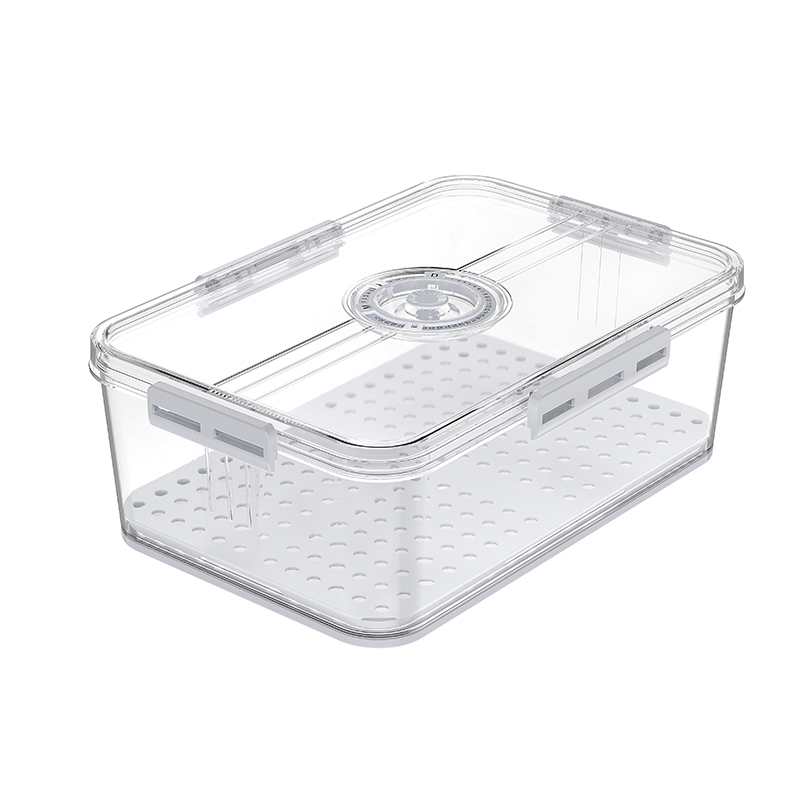
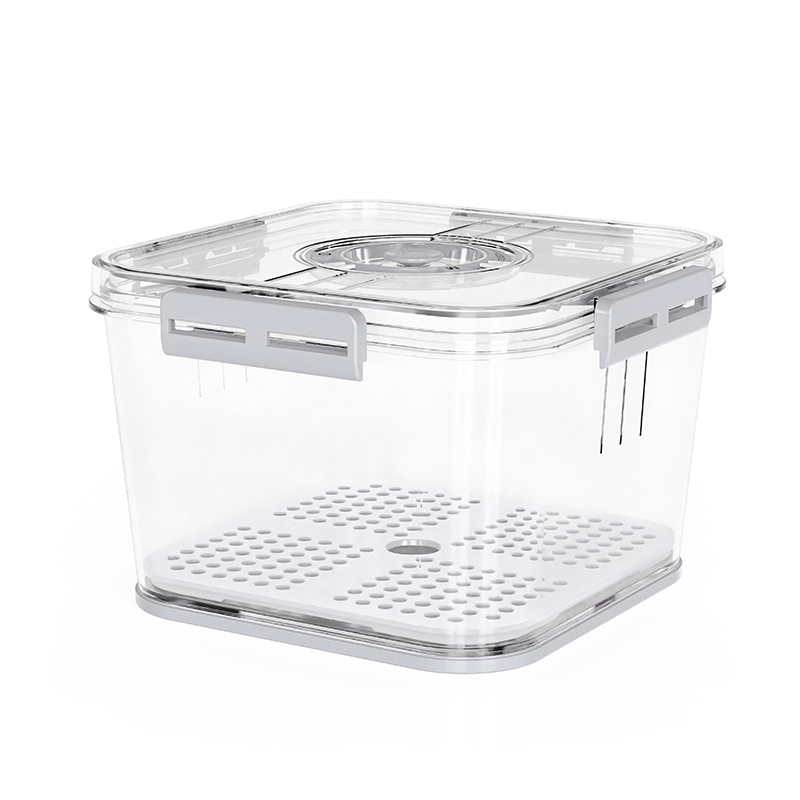
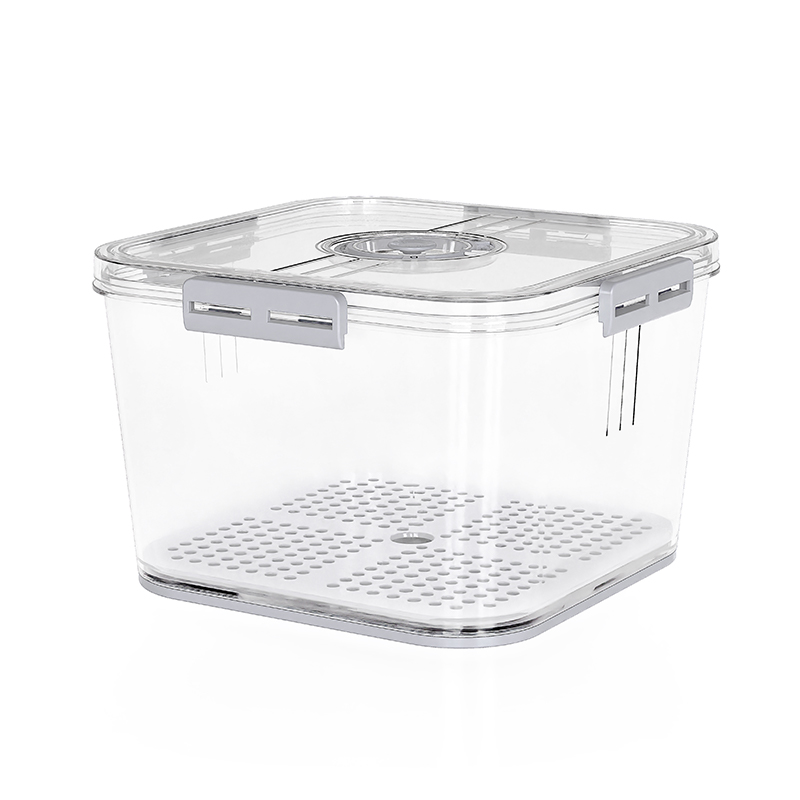
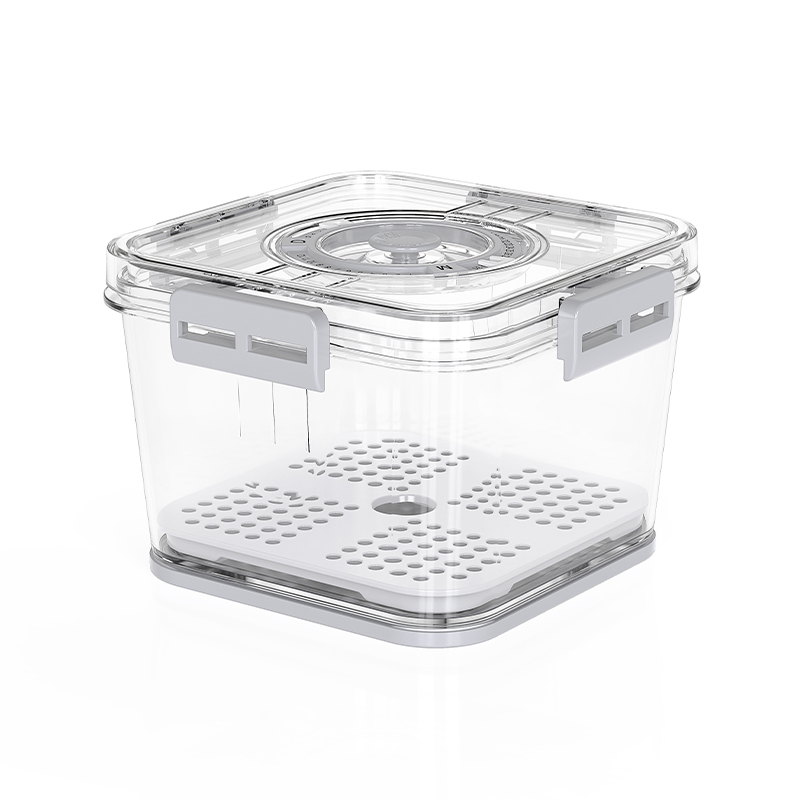
The refrigerator punishes the wrong container faster than any other room: humidity is high, shelves are shallow, and condensation forms every time the door opens. Three functions earn their space here. Drainage—a raised drain board under berries, grapes, and cut vegetables keeps food out of its own moisture, which is often the difference between days and a week of usable life. Visibility—clear walls and low profiles shorten the time the door stands open, which protects the whole shelf, not just one box. Time awareness—leftovers and opened packages fail silently, so a date dial or timer lid turns "when did I open this?" into a two-second glance.
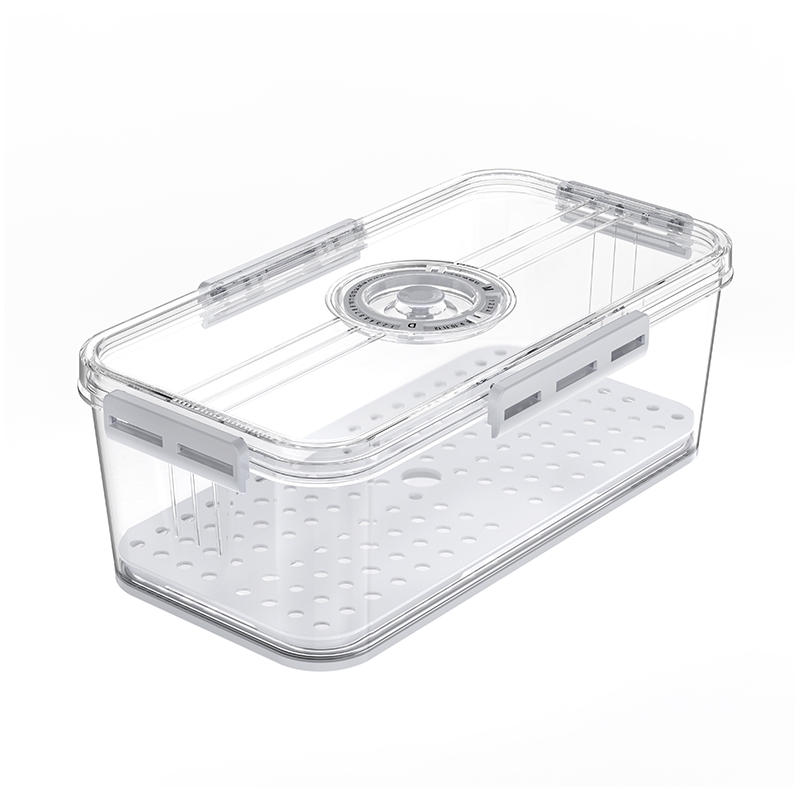
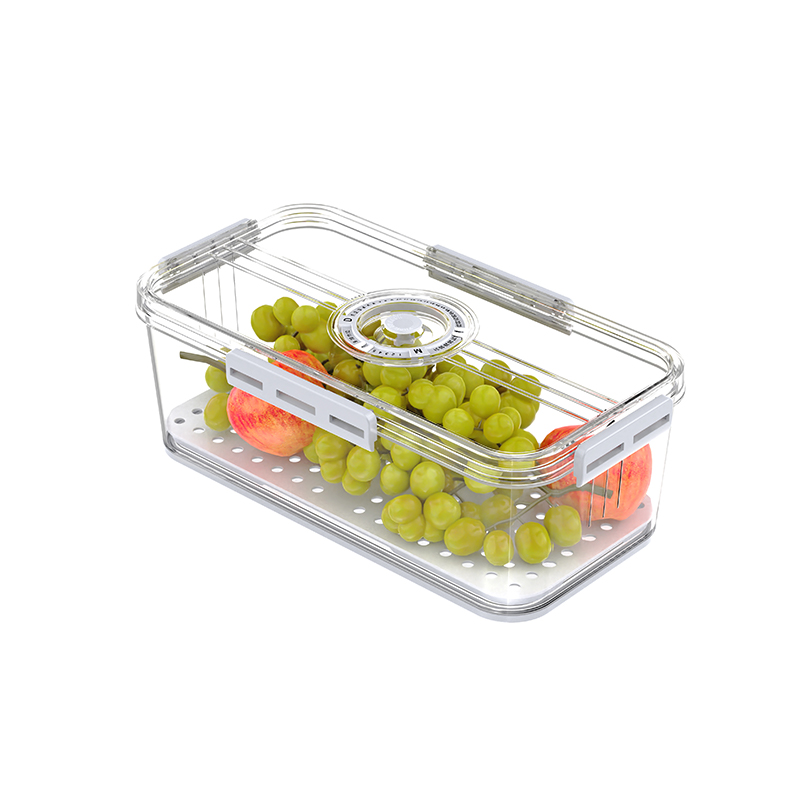 Stackable Fridge Storage Box with Drain BoardClear PET container with a raised drain board that keeps fruits and vegetables out of collected moisture. Its low, stackable profile suits shallow refrigerator shelves, extending produce life while keeping contents visible at a glance.View Product →
A practical fridge setup stacks shallow, uniform boxes so shelves carry load safely, dedicates one drain-box layer to produce, and moves cooked food into sealed or vacuum lids to slow moisture loss and keep shrimp and cut melon from trading smells.
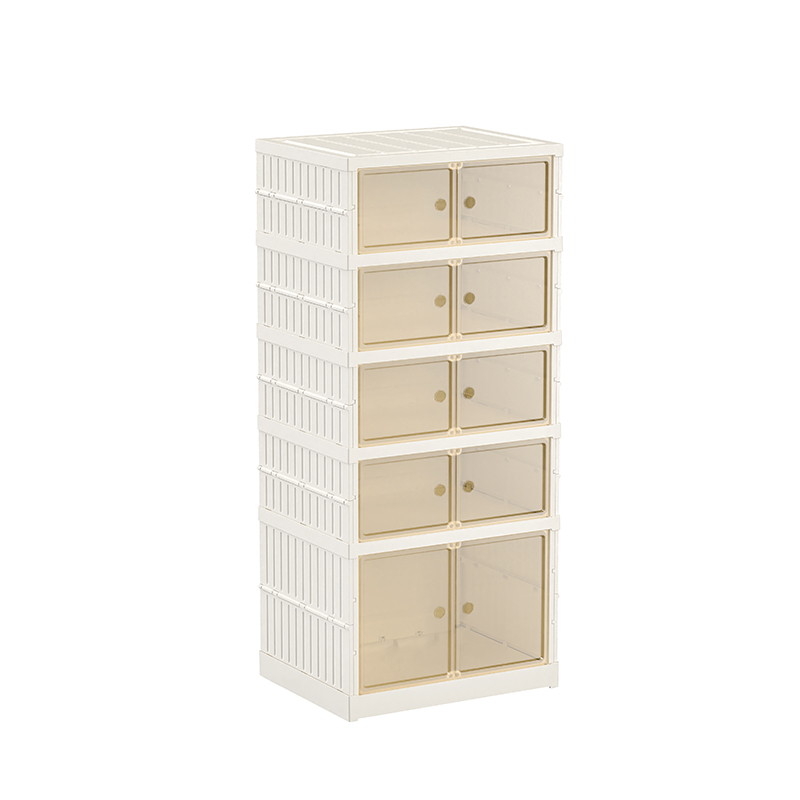
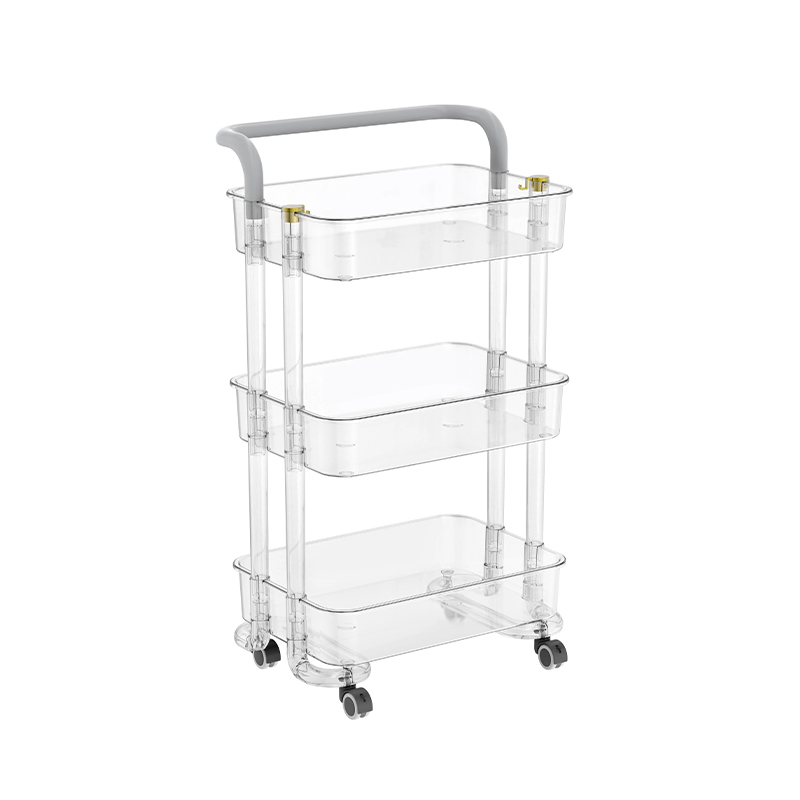
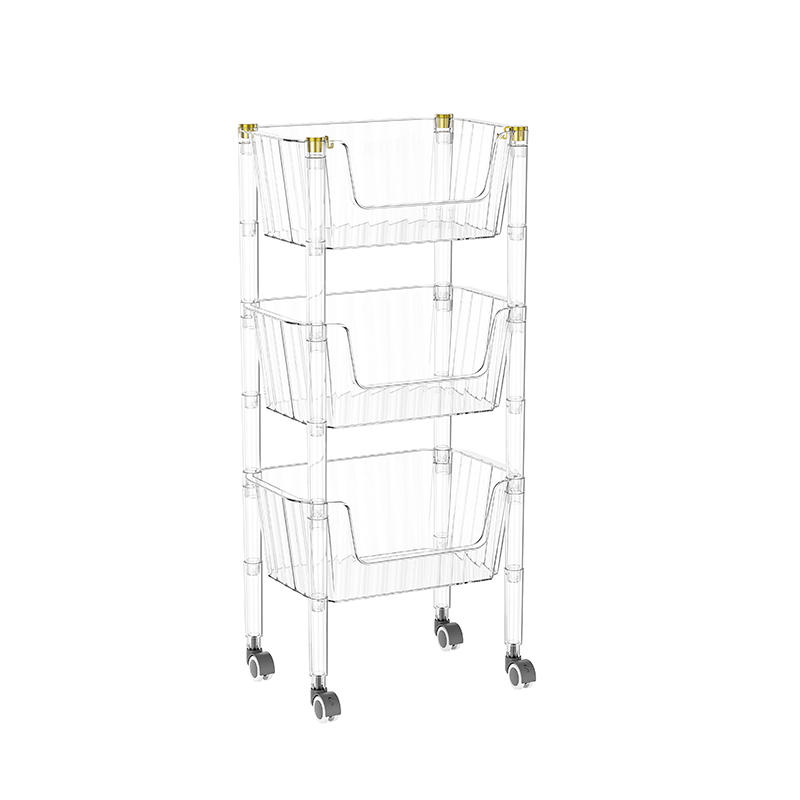
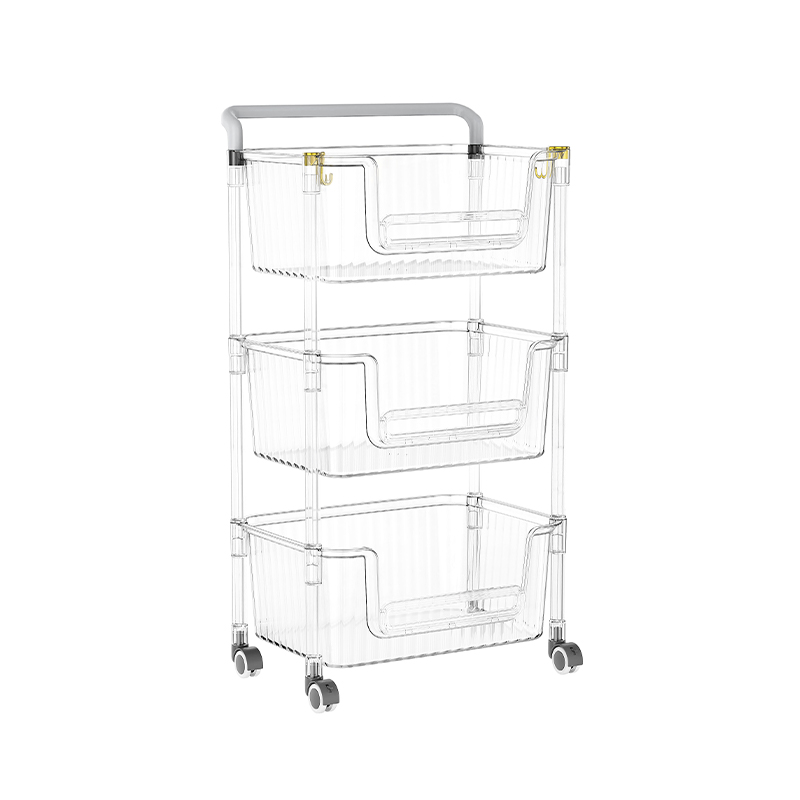
Away from water, storage is about volume and movement. Wheeled carts solve dead zones: a 15-to-25-centimeter gap beside a dresser, washing machine, or sofa becomes working storage, and clear tiers mean daily items are found without opening every drawer. Foldable cabinets earn their place in seasonal rotation—collapse them flat when winter textiles or holiday decorations go back into storage, then stand them up when the season turns. Fixed open bins still make sense for heavy, rarely touched items on high shelves, where casters add cost without adding value.
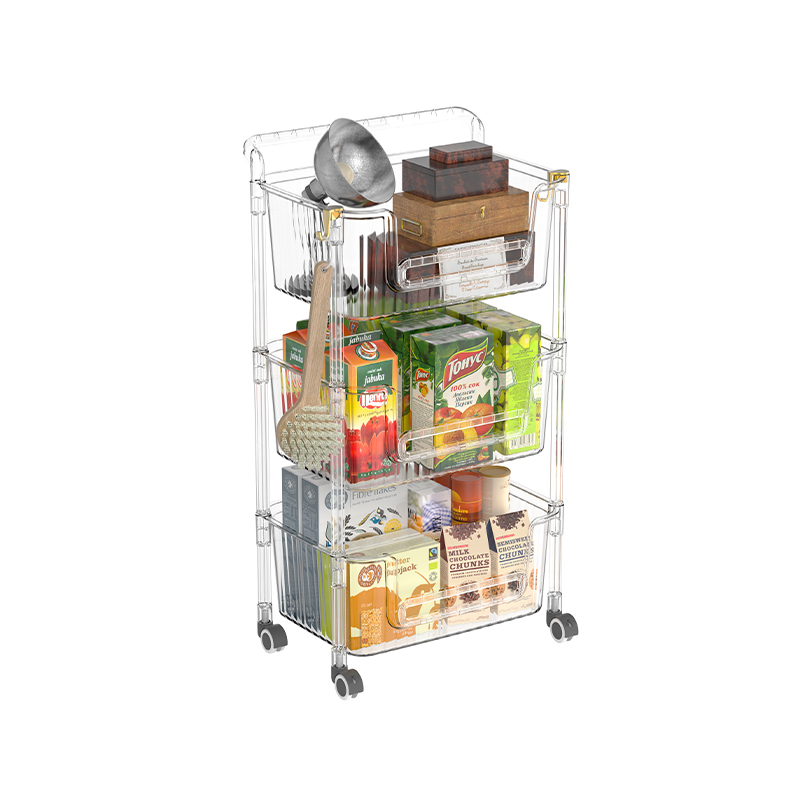 Adjustable 3-Tier Clear Rolling Storage CartThis slim, wheeled cart turns narrow gaps beside dressers, washers, or sofas into accessible storage. Clear tiers make daily items easy to spot, and durable casters let it roll wherever space runs short.View Product →
Counter space is the most expensive surface in a kitchen or bathroom, so organizers there should be low, modular, and presentable enough to stay exposed. Small stackable containers with timed lids suit tea, snacks, and supplements, while divided cosmetic organizers keep morning-routine products upright and in view. The test is simple: if an organizer looks good enough to leave out, it will actually be used, and clutter stays off the counter.
Most feature lists are noise, but a short list maps directly to measurable benefits:
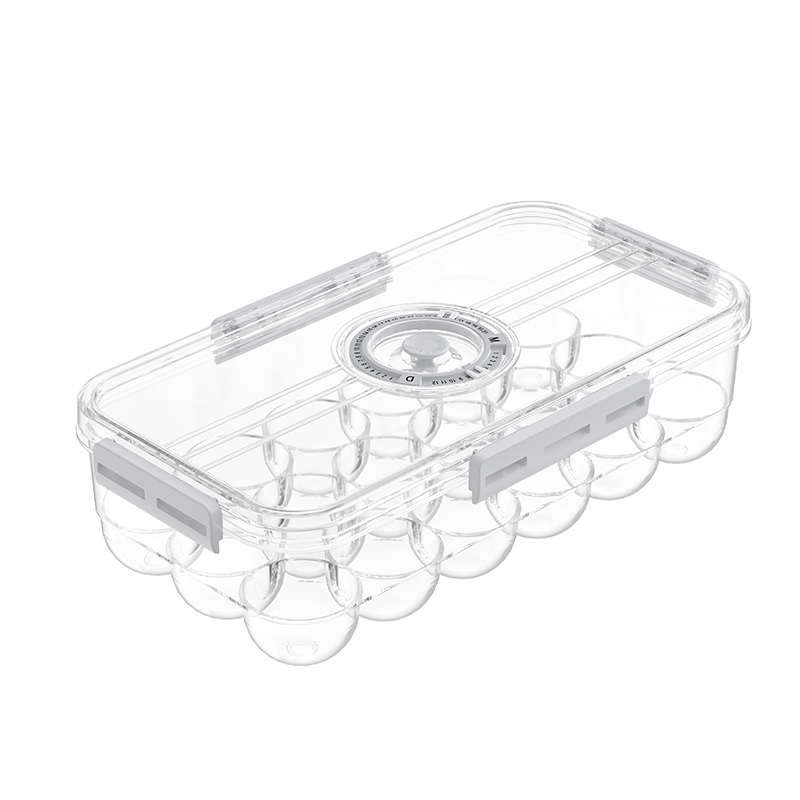
Eggs show why time tracking matters. A household empties a carton at an uneven pace, and the original packaging hides both the remaining count and the storage date. A stackable bin with a time-tracker lid makes the quantity visible at a glance and records the date on a dial, which removes one of the most common "is this still good?" arguments from the kitchen.
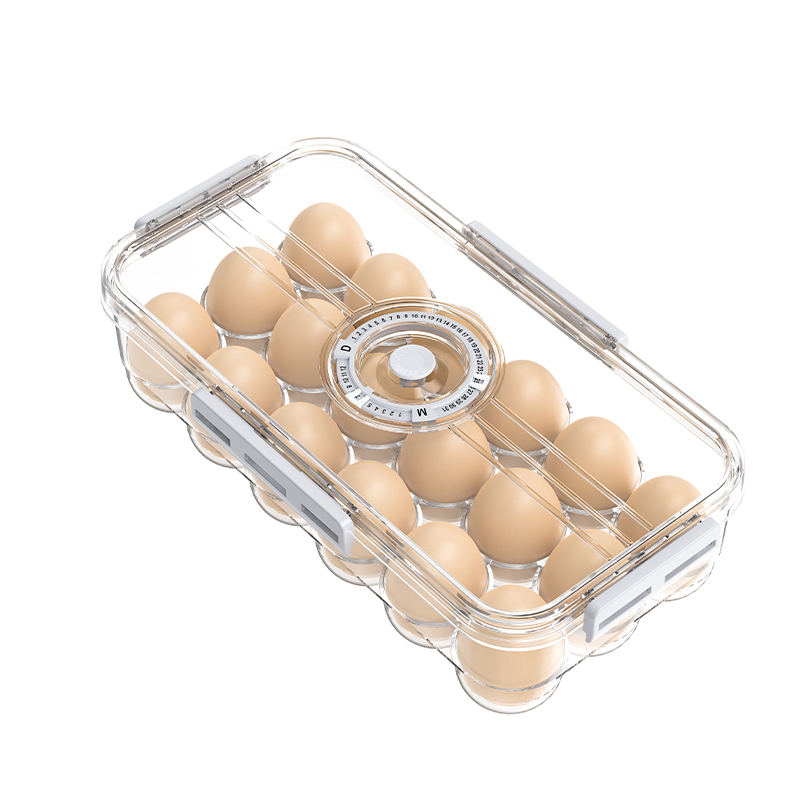 18-Count Stackable Egg Bin with Time Tracker LidA clear, stackable 18-egg bin whose dial lid records the storage date. It shows remaining count at a glance and seals in odors, answering the recurring question of whether eggs are still fresh.View Product →
Run any purchase through this sequence and weak choices expose themselves before money is spent:
Material decides the washing method. PET keeps its clarity longest with hand washing in warm water and mild detergent; boiling water and dishwasher heat can warp thin PET walls. PP tolerates top-rack dishwashers and hotter water, which is one reason it dominates lid production. Skip abrasive scrubbers on any clear surface—micro-scratches scatter light and turn a transparent box cloudy within a year. Retire containers once they crack, cloud badly, or hold odors, because scratched grooves also trap residue where cleaning cannot reach.
For a complete routine, this cleaning and maintenance guide for home plastic storage organization covers washing methods, stain removal, and how to store the containers themselves between uses.
Household storage containers reward a disciplined purchase far more than a large one. Material and closure decide whether food stays safe and visible; size and placement decide whether the system survives contact with a real kitchen; and a handful of features—drainage, time tracking, wheels—do most of the daily work. The same order of decisions guides production: at Orgwiser, a Ningbo-based plastic housewares manufacturer running 50 injection molding machines on fully automated lines across PET, bamboo fiber, and acrylic, material selection and functional detail are settled before the first unit is molded. Apply the same sequence when buying, and the containers chosen this year will still be in service long after the trend colors fade.


Zhangqi Industrial Park, Cixi City, Ningbo City, Zhejiang Province

