
 Search for...
 English
 Español
 日本語
 한국어
 عربى
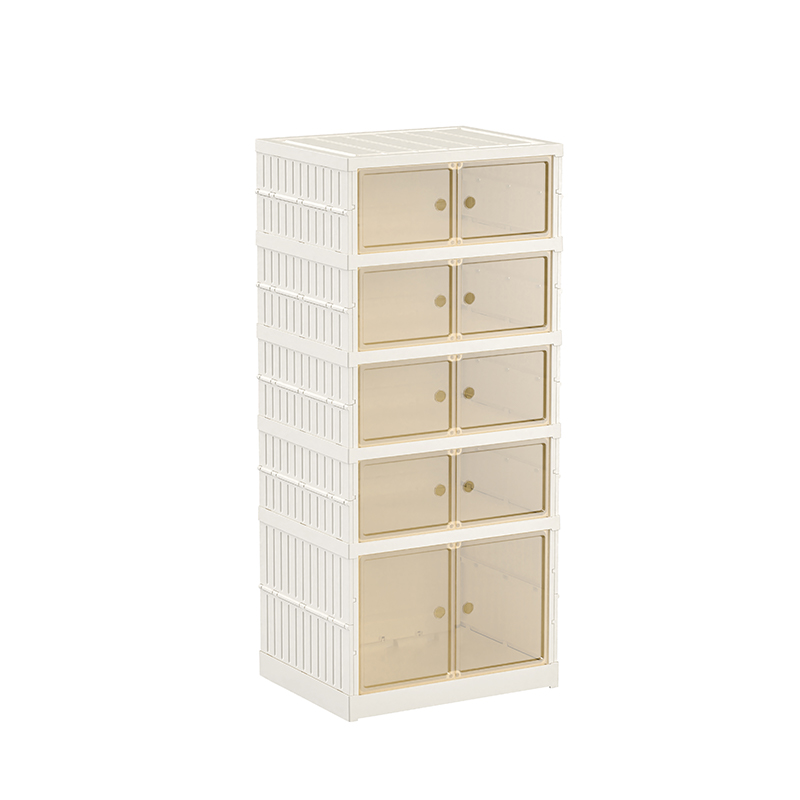
Multi-Purpose 6-Tier Foldable Storage Cabinet

Three half-used bags of spinach, a container of leftovers nobody wants to open, and a shelf whose back row has not been seen for a month: that is what most kitchens look like before storage is planned. Buying another box rarely fixes it. The problem is almost never the amount of space, it is which box, in which material, with which lid.
The short answer first. A kitchen storage box earns its shelf space only if it passes four checks at the same time. The material has to suit the temperature the food will meet, the lid has to seal without needing two hands and a knee, the dimensions have to match the real shelf rather than the fridge cavity, and the shape has to be cleanable in under a minute. Boxes that fail any one of those checks end up at the back of a cupboard, which costs more than choosing correctly the first time.
The rest of this guide works through those four checks, including the numbers worth asking a supplier for and the features that decide whether a box is still in daily use two years from now.
Nearly every kitchen storage box on the market comes from one of four material families, and the real differences show up in clarity, heat behaviour, and how the product ages.
PET (polyethylene terephthalate) is the standard choice for fridge boxes. It stays clear at chilled temperatures, resists odour pickup, and does not cloud quickly. PP (polypropylene) tolerates heat far better and belongs anywhere food gets reheated. ABS is stiffer and typically goes into structural parts such as handles, frames, and rails, where rigidity matters more than transparency. Bamboo fibre composites suit dry storage, where a matte finish matters more than seal performance.
| Material | Typical kitchen use | Clarity | Heat behaviour | Watch out for |
|---|---|---|---|---|
| PET | Fridge drawers, stackable food boxes, drain trays | High | Chilled to warm, not for boiling liquids | Can distort if hot oil or a hot pan goes straight in |
| PP | Reheat containers, soup boxes, general bins | Medium, semi-translucent | High, handles microwave reheating | Less clear, and it can hold food odours longer |
| ABS | Handles, frames, rails, cosmetic inserts | Opaque or metallised | Moderate | Not the best choice for direct food contact |
| Bamboo fibre composite | Dry pantry storage, retail-style containers | Opaque, matte | Moderate | Needs care in damp environments |
One assumption causes most bad purchases: treating clarity as a quality grade. It is a PET advantage, not a measure of how good a box is. A slightly cloudy PP container that handles reheated soup every day does more work than a crystal-clear PET box that warps the first time hot oil touches it. If you want the fuller breakdown of how the two polymers behave in transparent storage, the comparison of PET and PP in transparent storage covers it in more depth.
The chart below is a comparative view rather than a laboratory result. It shows where each polymer is strongest before you handle physical samples.
A box that sits neatly on the shelf but blocks the door bin, or stacks taller than the gap above it, comes straight back. Four numbers settle this before an order is placed.
For buyers working at volume, these figures belong on the specification sheet rather than being discovered after the first container lands. A supplier who can quote internal base dimensions, lid-inclusive stack height, and wall thickness without going away to check usually already has that data, which is a useful signal about consistency between production runs.
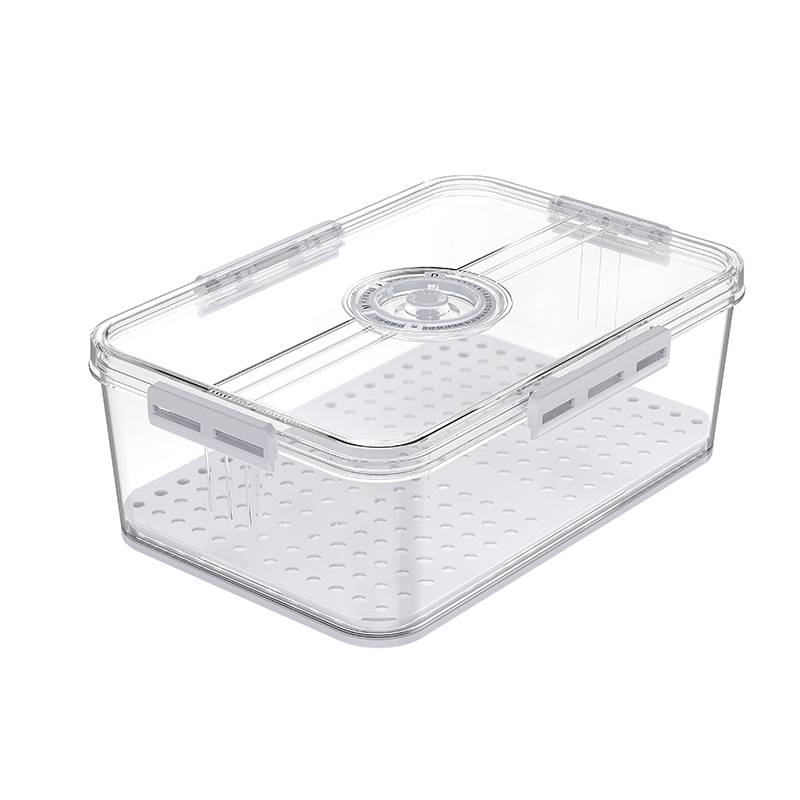
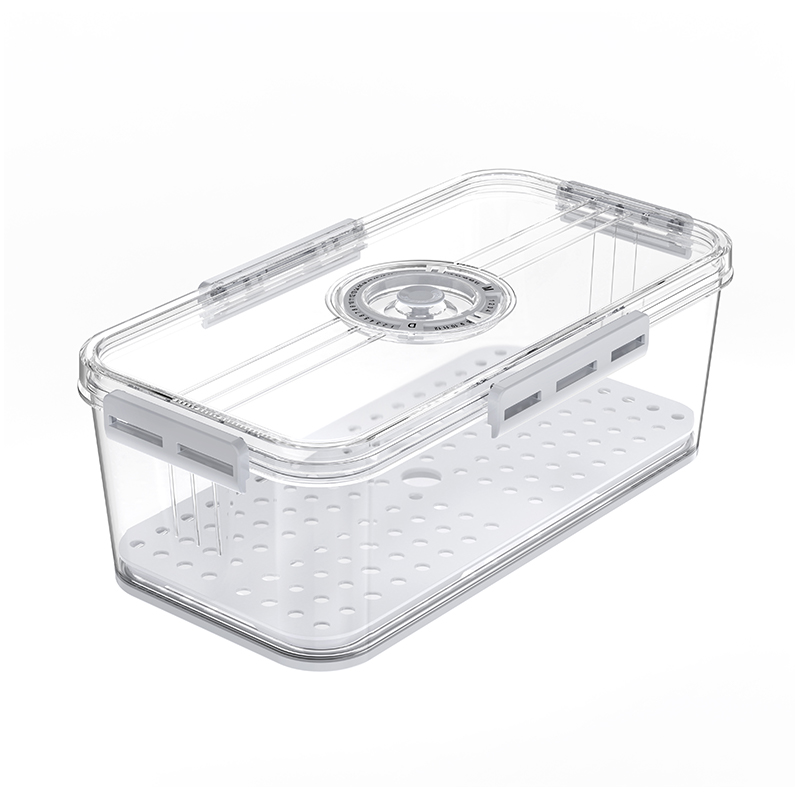
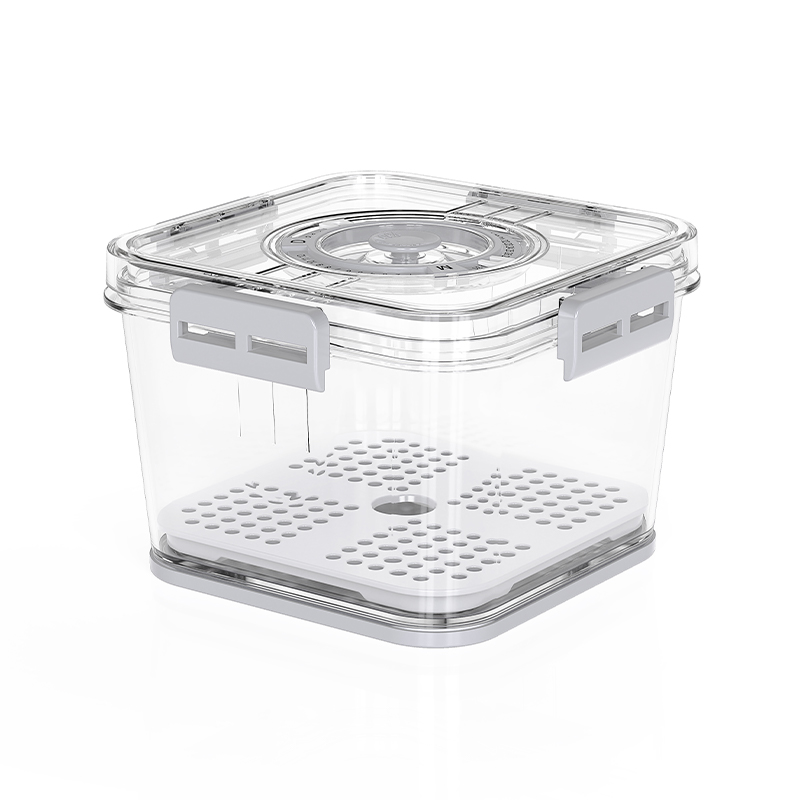
Washed vegetables and cut fruit release water. Inside a sealed box that water pools at the bottom and softens the lowest layer within a day. A drain board lifts food above the water line, and a removable tray lets you pour the liquid off without emptying the entire box.
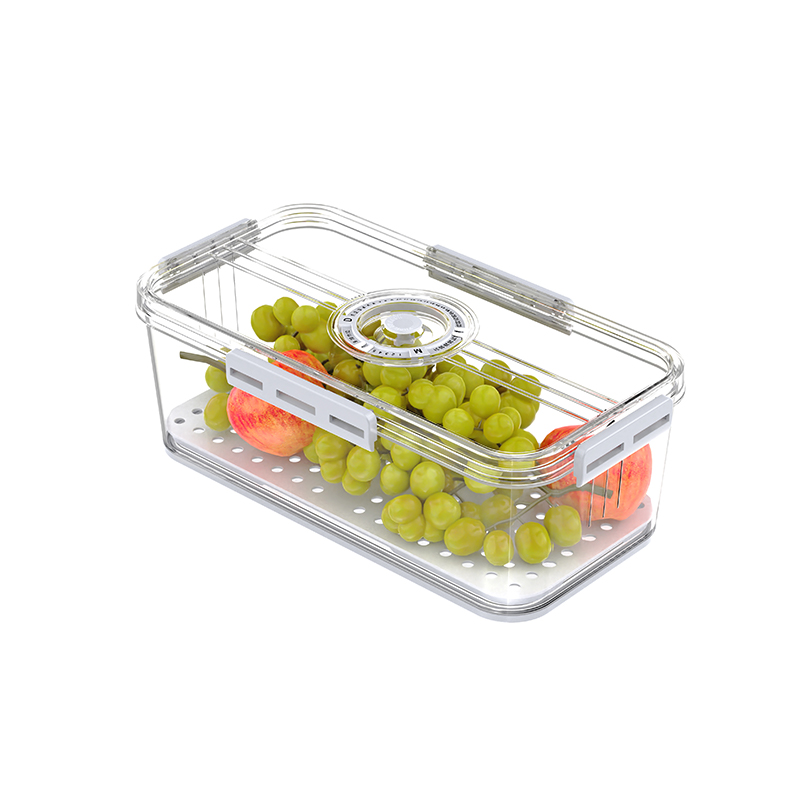 Medium Stackable PET Fridge Food Storage Box with Drain BoardA medium stackable container with a removable drain tray that lifts washed produce above pooled water, plus an airtight silicone seal for carrying liquids.View Product →
Seals are the second failure point. A simple press-fit lip is economical and fine for dry goods. For liquids, and for anything travelling in a lunch bag, look for a silicone gasket seated in a groove, because it survives repeated opening without losing shape. Vacuum boxes take the same idea further by removing air to slow oxidation in prepped meals, at the cost of an extra pump step each time.
Cleaning access is the third. A gasket buried deep inside a narrow rim will grow mould no matter how carefully the box is washed. If the gasket cannot be removed, or the drain tray does not lift out, treat that container as dry storage only.
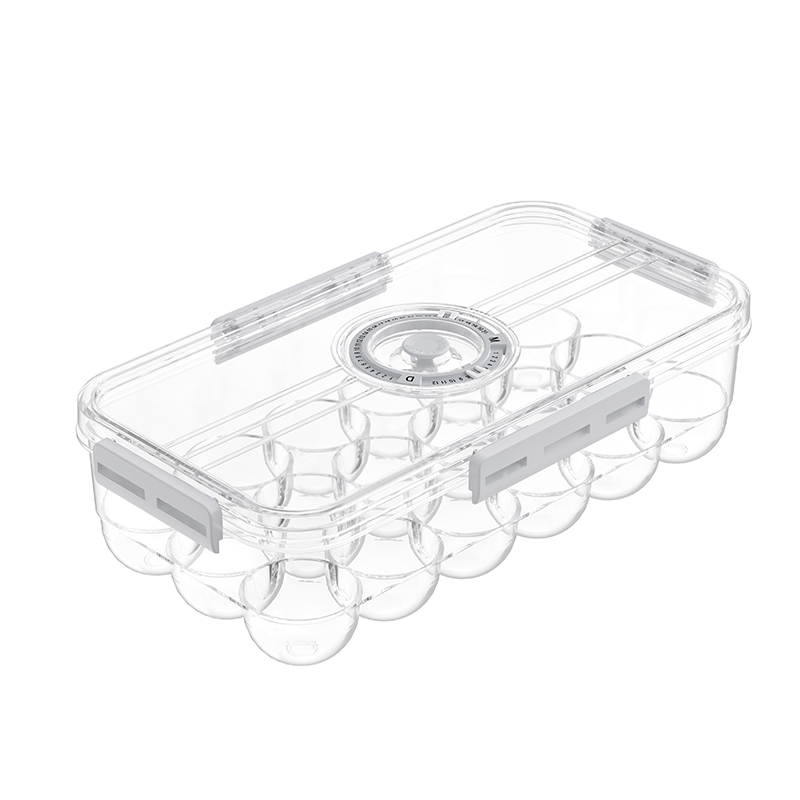
Food gets thrown away less often because people forget they own it and more often because the oldest item sits at the back with nothing marking how long it has been there. A time-tracking lid handles this with a rotating dial showing the day or date the contents went in.
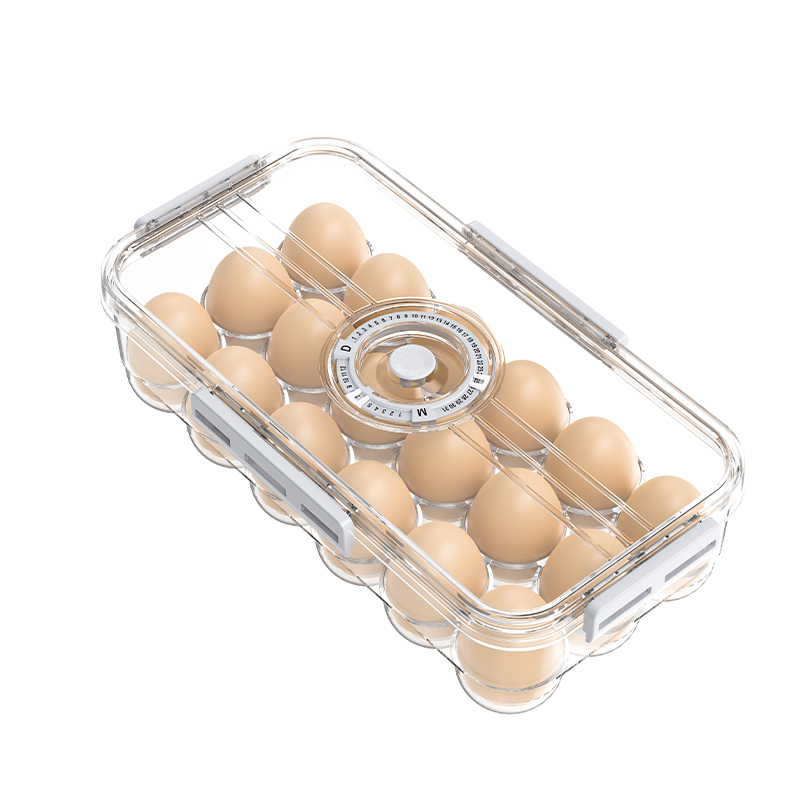 Stackable 18-Count Egg Storage Bin with Time Tracker LidClear 18-egg bin with a rotating time-tracker lid and silicone seal, helping rotate stock and see remaining eggs without opening the refrigerator.View Product →
The same logic extends past eggs. Cooked grains, portioned meat, and opened packets of nuts all benefit from a visible date marker. In a family kitchen the dial replaces writing on tape, and in a commercial kitchen it supports first-in-first-out rotation without extra labelling work. When comparing samples, check that the dial moves with a deliberate click rather than sliding freely, since a loose dial drifts and stops being trusted.
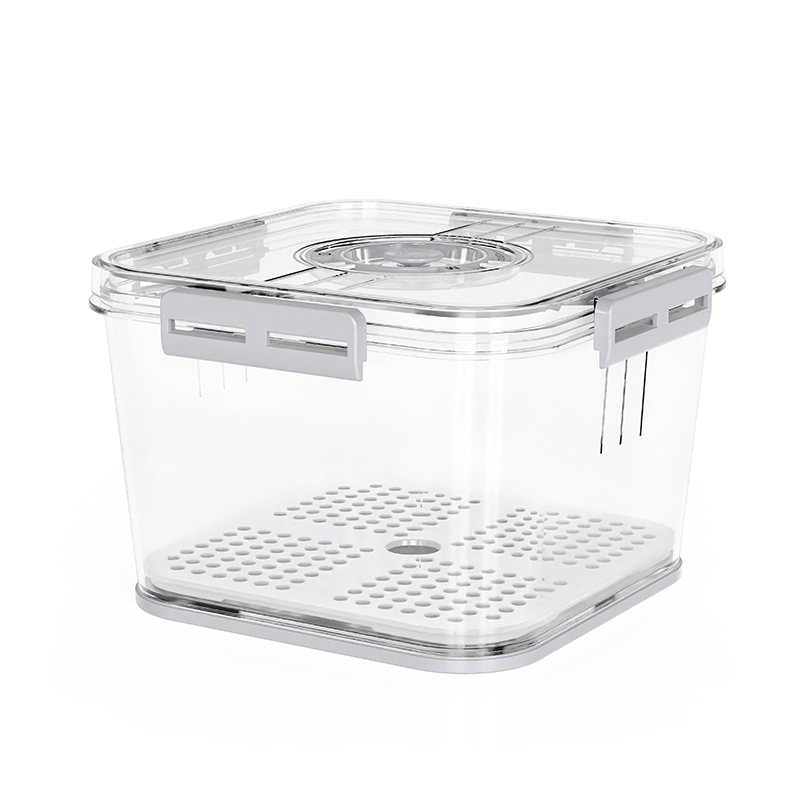
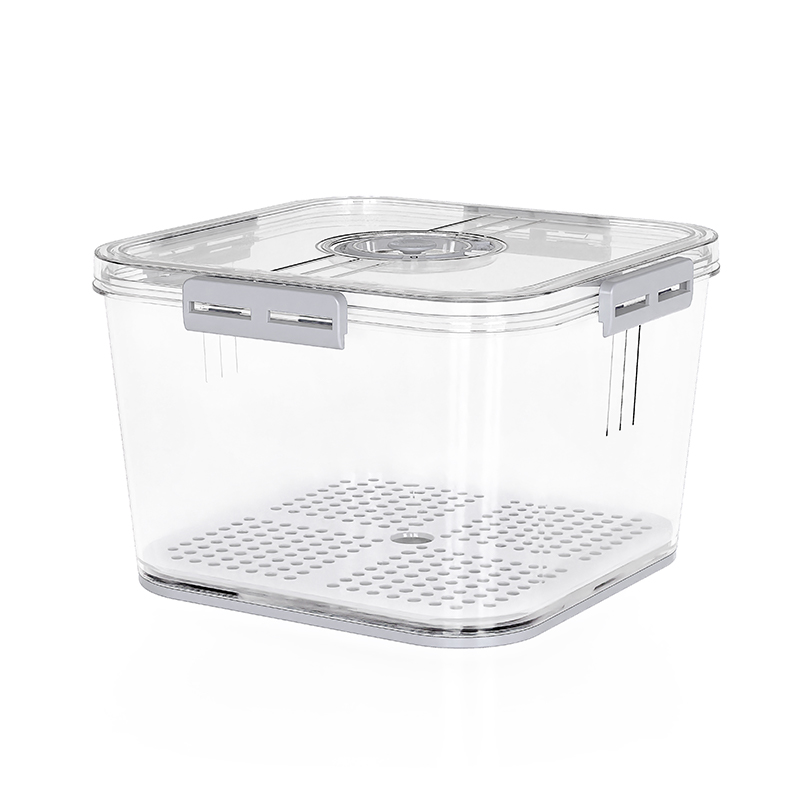
Batch cooking changes the ideal box size. If you roast vegetables, portion rice, or prep salad for the week, a high-capacity box with a drain base and timer control does three jobs at once: it holds the volume, keeps food clear of collected liquid, and records when the batch was packed.
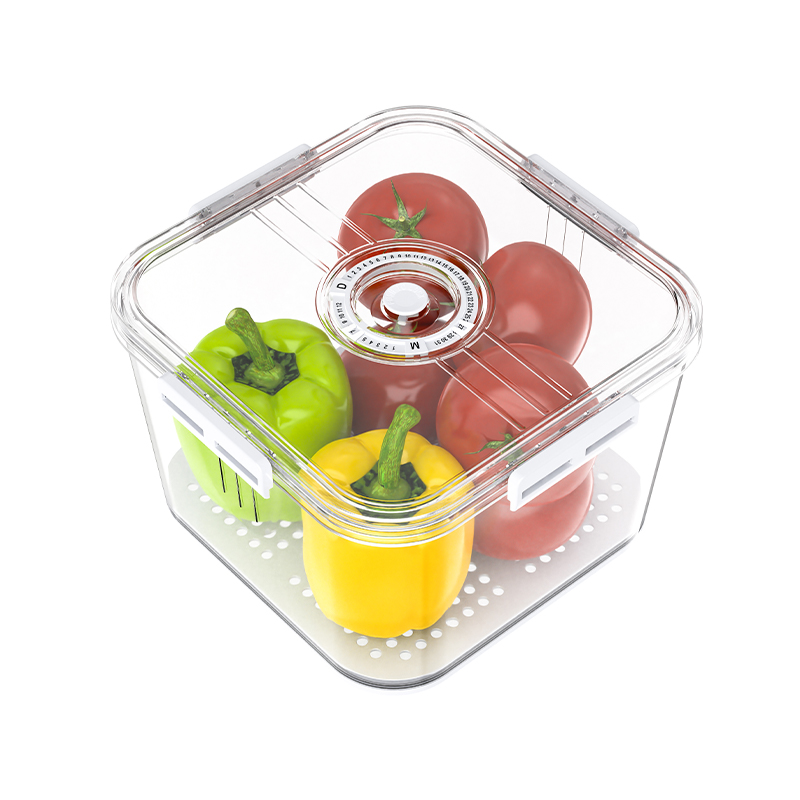 High Capacity Fridge Storage Drain Box with Timer ControlLarge stackable container with a removable drain tray, timer control, and airtight lid for batch-cooked meals; useful until filled weight makes lifting awkward.View Product →
There is a practical ceiling, though. Once a filled box passes roughly 3 kg, lifting it off a shelf becomes a two-hand job and the chance of dropping it rises. Above that weight, splitting into two medium boxes with the same footprint and stacking pattern usually serves better than one large container, even though it means more parts to wash.
For importers, distributors, and retail buyers the questions change. Appearance matters less than consistency, and the real test is whether box number five thousand closes the same way as box number five.
Ask for the following before placing a bulk order:
Production capability matters here as much as the sample itself. Tooling accuracy, cooling consistency, and mould maintenance determine whether the tenth container matches the first. An injection moulding operation with a broad machine base, dedicated auxiliary equipment, and in-house material work across PET, bamboo fibre, and acrylic can hold those tolerances through high-volume runs, which is what makes a sample meaningful rather than decorative. Reviewing the kitchen plastic storage range before requesting samples is usually faster than starting from a blank brief.
Storage works when the box matches the job. Pick PET for anything that lives in the fridge and needs to stay visible, PP for anything going into a microwave, and a stiffer polymer for the parts that carry load. Confirm the four fit measurements before you buy, and check that gaskets and drain trays come out for cleaning.
Buyers comparing samples should weigh the same questions, then add consistency: the same internal dimensions, the same lid grip, and the same clarity across every production run. A box that answers those points is one customers reorder, and reordering is the only performance metric that matters in the long run.


Zhangqi Industrial Park, Cixi City, Ningbo City, Zhejiang Province

