
 Search for...
 English
 Español
 日本語
日本語
 한국어
한국어
 عربى
عربى
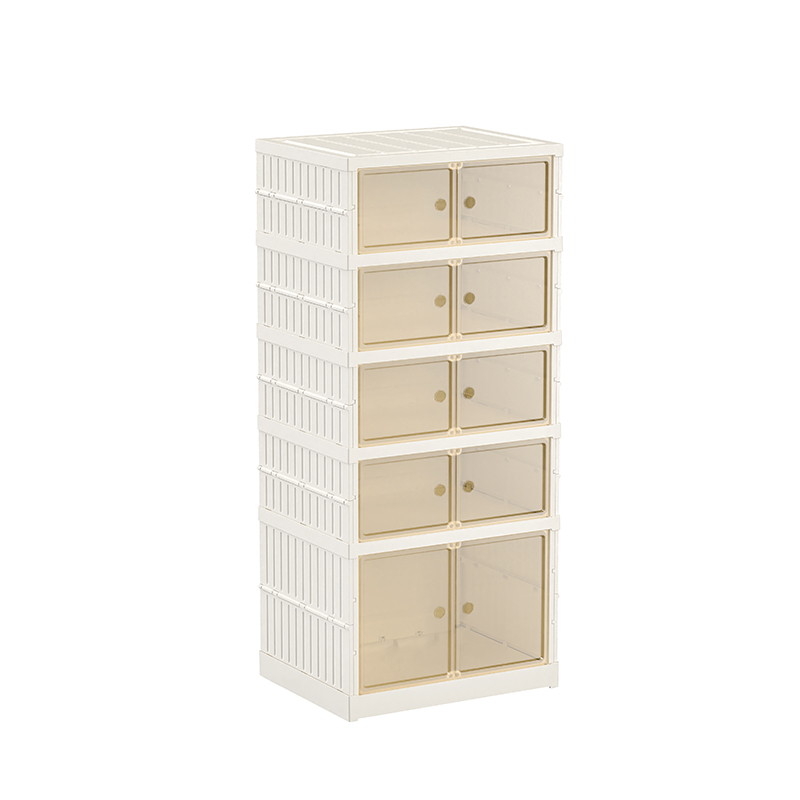
Multi-Purpose 6-Tier Foldable Storage Cabinet

Selecting a high-density home plastic storage framework provides an optimized, long-term solution for spatial organization, environmental protection, and inventory preservation within residential ecosystems. By utilizing specific thermoplastic resins engineered for impact resistance, tensile strength, and chemical inertness, these vessels create a protective micro-barrier that prevents moisture intrusion, dust accumulation, and pest contamination. This material configuration provides a lightweight yet structurally resilient alternative to traditional wood, canvas, or cardboard alternative containers, ensuring an extended lifecycle exceeding 20 years under standard indoor and unconditioned storage environments.
In the modern residential architecture landscape, efficient square-footage utilization is paramount to maintaining functional living zones. Storage systems must withstand significant vertical compression loads when stacked, resist degradation from ultraviolet (UV) radiation in attics or garages, and remain non-toxic for indoor air quality. Transitioning to custom-molded polymer storage units resolves the vulnerabilities of organic alternatives, which absorb humidity, encourage mold spores, and buckle under uncoordinated structural loading. By matching specific household storage categories to the appropriate polymer matrix, homeowners can establish highly stable, scalable organization networks.
The performance metrics of home plastic storage solutions depend on the molecular composition of the thermoplastic resin selected during the injection molding process. Not all consumer plastics possess the same thermal thresholds or load bearings.
Polypropylene is the dominant material choice for high-utility storage containers due to its exceptional fatigue resistance and high melting point of approximately 160 degrees Celsius. PP features a semi-crystalline structure that allows it to bend and flex repeatedly without experiencing stress-whitening or structural fracturing. This resilience makes it ideal for live-hinge latching mechanisms, snap-on lids, and heavy-duty bins designed for dense stacking configurations.
For unconditioned environments prone to extreme sub-zero cold, such as detached garages or outdoor sheds, High-Density Polyethylene provides superior impact resilience. HDPE features a linear molecular chain that remains highly flexible at temperatures as low as negative 50 degrees Celsius, preventing the brittle glass-transition fracturing common in low-tier plastics. It offers remarkable environmental stress-crack resistance and holds up against automotive fluids, pesticides, and household solvents.
Determining the correct containment framework requires analyzing primary mechanical behaviors, transparency requirements, and environmental tolerances. The table below provides an engineering comparison of the three primary residential plastic storage formats available.
| Technical Factor Profile | Clear Polypropylene Totes | Heavy-Duty HDPE Bins | Polystyrene Modular Drawers |
|---|---|---|---|
| Optical Clarity Rating | High Translucency (Immediate Visual Recognition) | Opaque (Zero Internal Visual Access) | Ultra-High Clear (Glass-Like Optical Profile) |
| Tensile Stacking Capacity | Moderate (Up to 25 kg Maximum Load) | Exceptional (Up to 75 kg Compression Limit) | Low (Requires Dedicated Support Frames) |
| Sub-Zero Brittle Threshold | Moderate (Susceptible at below 0 degrees) | Excellent (Maintains Flex down to -50 degrees) | Extremely Poor (High Shatter Risk) |
| Primary Application Target | Closets, Under-Bed, Living Space Linens | Garages, Basements, Long-Term Tool Storage | Craft Rooms, Vanities, Office Small Goods |
| Impact Energy Absorption | Moderate (Elastic Recovery Pattern) | High (Structural Ribbing Dampens Force) | Low (Prone to Stress Cracking) |
The empirical data gathered from residential testing programs highlights a distinct division in application targets. Clear polypropylene options provide rapid visual scanning for dynamic daily indoor storage spaces, but they lack the heavy load tolerance and thermal insulation capacity required for rough garage environments. Heavy-duty HDPE containers offer optimal perimeter protection and structural reliability for utility items, but they require a labeling system due to their opaque outer finish.
Modern home plastic storage engineering includes smart exterior adjustments that increase container load capacities without increasing wall thickness or raw material consumption.
Maximizing the effectiveness of an organized home storage layout requires a systematic assessment strategy to match specific household items with the correct storage container format.
While high-grade home plastic storage units are inherently resilient, long-term exposure to external stressors can degrade plastic material chains if not managed correctly.
Prolonged exposure to direct sunlight introduces ultraviolet rays that break down polymer backbones, a process known as photodegradation. This degradation causes colored plastics to fade and clear plastic layers to yellow, leading to micro-cracking along high-stress points. To prevent this, store clear polypropylene containers inside dark closets or behind enclosed cabinet doors, using opaque containers treated with UV-stabilized carbon black additives for open garage shelving exposed to sunlight.
When plastic containers are kept under constant heavy loads, they can experience creep deformation, where the plastic slowly sags or warps over time. If weight is distributed unevenly, the center of the lid may sag inward, breaking the perimeter moisture seal. To prevent creep, place heavier items at the bottom of the container stack and distribute weight evenly across the base, ensuring total stack weight remains within 80 percent of the manufacturer's compression limit.


Zhangqi Industrial Park, Cixi City, Ningbo City, Zhejiang Province

