
 Search for...
 English
 Español
 日本語
日本語
 한국어
한국어
 عربى
عربى
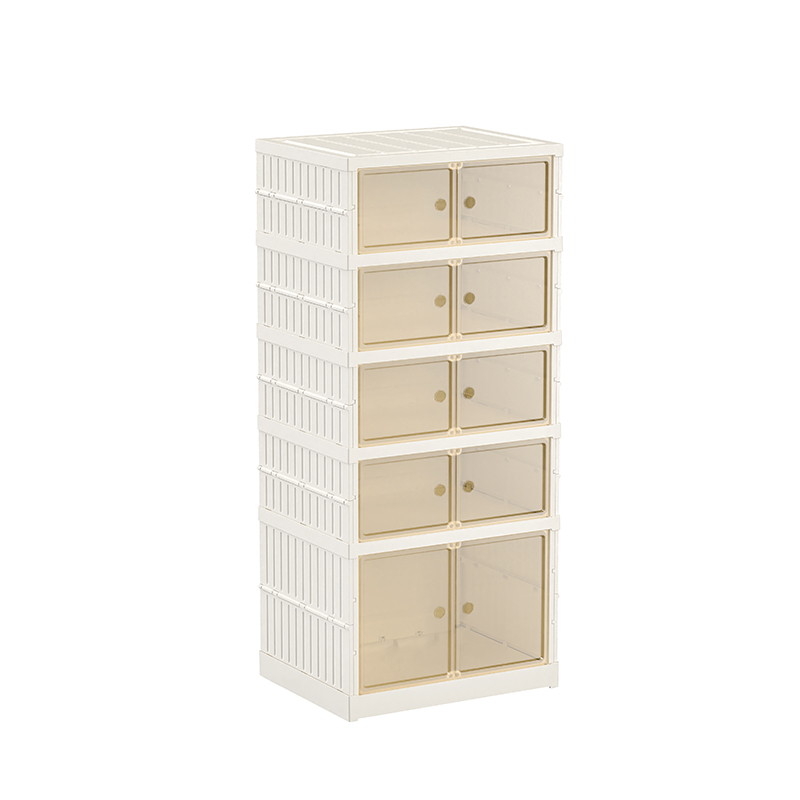
Multi-Purpose 6-Tier Foldable Storage Cabinet

Beauty plastic storage drawers are widely used in homes, salons, and professional beauty environments to organize cosmetics, skincare products, tools, and accessories. Among all design elements, the drawer sliding system and flip-top mechanisms play a central role in daily usability. These components directly affect how smoothly the storage unit operates and how well it withstands repeated opening and closing over time. A storage drawer may look visually appealing, but if the mechanism feels stiff, unstable, or prone to wear, the overall user experience can be affected.
Smooth operation refers to the ease and consistency with which drawers or flip-top lids can be opened and closed. In plastic storage drawers, this is influenced by factors such as the precision of the molding process, surface finish, alignment of sliding tracks, and tolerance control between moving parts. A smooth drawer typically glides without jerking, excessive resistance, or sudden drops. For flip-top designs, smoothness is reflected in controlled opening angles and stable movement that does not snap open or collapse unexpectedly.
The durability of drawer and flip-top mechanisms is closely tied to the type of plastic used. Common materials include polypropylene, polystyrene, and ABS plastics. Each material has different characteristics related to rigidity, flexibility, and resistance to stress. A plastic that is too rigid may crack or deform under repeated use, while a plastic that is too soft may warp over time, affecting alignment. Balanced material selection helps ensure that sliding rails, hinges, and edges maintain their shape after long-term use.
Manufacturing precision plays a significant role in how smooth and durable beauty plastic storage drawers feel. Injection molding quality determines whether drawer tracks are straight, evenly spaced, and free from burrs or rough edges. Small inconsistencies in mold accuracy can lead to friction points that cause drawers to stick or wobble. When drawers are produced with controlled tolerances, the sliding action tends to remain stable even after repeated use.
Plastic storage drawers typically use integrated plastic tracks rather than metal rails. These tracks are molded directly into the drawer body or frame. A well-designed track provides guidance without excessive contact pressure. Rounded edges and smooth surfaces help reduce wear between the drawer and the housing. Some designs include subtle grooves or stops to prevent drawers from being pulled out too easily while still allowing full access to stored items.
Flip-top beauty storage drawers rely on hinge structures that are often molded as part of the plastic body. These hinges may be living hinges or pin-style joints. Living hinges are thin, flexible sections of plastic that bend repeatedly without separating. Their durability depends on material elasticity and thickness control. When designed properly, they can withstand frequent opening cycles. Pin-style hinges may offer more structural support but require precise assembly to avoid looseness or misalignment.
Beauty storage drawers are often opened and closed multiple times a day, especially in professional environments such as makeup studios or salons. This repeated motion places continuous stress on drawer tracks and flip-top joints. Smooth mechanisms reduce friction during each cycle, which helps slow down wear. Rough or misaligned mechanisms, on the other hand, can accelerate surface abrasion and lead to deformation over time.
The durability of drawer mechanisms is also affected by how weight is distributed inside the storage unit. Beauty products such as glass bottles, metal tools, and skincare containers can add significant weight. If the drawer design does not evenly distribute this load across the tracks, stress may concentrate at certain points, causing sagging or resistance. Well-designed drawers account for expected load ranges and maintain structural stability under regular use.
Environmental conditions such as temperature, humidity, and exposure to cosmetic residues can influence the performance of plastic drawer mechanisms. Heat may cause some plastics to expand slightly, which can increase friction between sliding components. Humidity and product spills may introduce residue that affects smoothness. Durable designs consider these factors by using plastics with stable thermal properties and surfaces that are easier to clean.
| Feature | Drawer Mechanism | Flip-Top Mechanism |
| Primary Movement | Horizontal sliding | Rotational opening |
| Main Stress Area | Sliding tracks and edges | Hinge or joint section |
| Common Wear Cause | Friction and uneven load | Repeated bending or rotation |
| Maintenance Consideration | Cleaning tracks for debris | Avoiding excessive force |
From a user perspective, smooth and durable drawer mechanisms often translate into a sense of reliability and convenience. When drawers open quietly and predictably, users can access items quickly without distraction. Flip-top lids that stay open at a controlled angle improve visibility and reduce the need for constant adjustment. These subtle qualities influence how users perceive the overall quality of the storage unit, even if the materials themselves are lightweight.
Manufacturers often evaluate drawer and flip-top mechanisms through cycle testing, where components are opened and closed repeatedly to simulate long-term use. Resistance measurements help identify whether friction increases over time. Visual inspections can reveal stress marks, deformation, or surface wear. These testing methods help ensure that the mechanisms maintain consistent performance across expected usage periods.
In beauty plastic storage drawers, there is often a balance between affordability and mechanical refinement. More complex track designs or reinforced hinge structures may increase production costs. Simpler designs may reduce cost but rely heavily on material quality and precise molding to maintain smoothness. Manufacturers typically aim to optimize design so that durability and usability are maintained without unnecessary complexity.
Even well-designed drawer mechanisms benefit from basic maintenance. Keeping drawer tracks free from dust, powder, or cosmetic residue helps preserve smooth movement. Avoiding overloading drawers beyond their intended capacity reduces stress on sliding components. For flip-top designs, gentle operation rather than abrupt force helps maintain hinge integrity over time.
Beauty plastic storage drawers used in homes may experience lighter and more varied use, while those in professional environments often face frequent and repetitive operation. Durable drawer and flip-top mechanisms are especially important in professional settings where reliability supports workflow efficiency. Smooth operation helps reduce interruptions and supports organized, accessible storage throughout the day.
When designed with appropriate materials, precise molding, and balanced structural support, plastic drawer and flip-top mechanisms can maintain stable performance over extended periods. While plastic components may show gradual surface wear, consistent smoothness is achievable when friction is minimized and stress is evenly distributed. Understanding these design and material factors helps users make informed decisions when selecting beauty plastic storage drawers for their specific needs.


Zhangqi Industrial Park, Cixi City, Ningbo City, Zhejiang Province

